Planning an Amalfi Coast snorkelling tour? Compare boat trips, shore dives, and PADI courses, plus what affects price, safety, and visibility.
Who Each Tour Type Suits
An Amalfi Coast snorkelling tour isn't one product — it's a spectrum ranging from a two-hour paddle off a Positano beach to a full-day certified dive near Punta Campanella's marine reserve. Picking the wrong category wastes money and, worse, wastes your one good-weather day. The Tyrrhenian Sea here is generally calm from late May through September, but swell picks up fast near headlands like Punta Campanella and the Li Galli Islands, so matching the tour to your actual swimming ability matters more than it does on a flat Caribbean reef.
I'd steer most first-timers toward a boat-based snorkelling trip rather than a shore outing, even though shore tours are cheaper. Boats reach water that's clearer and less crowded, particularly around Furore Fjord and the coves near Praiano, and you avoid the awkward scramble over rocks that shore access often requires.
Beginner snorkellers and families
Families with children aged roughly 6 and up do well on group boat tours that include life jackets and a guide who gets in the water with the group. Look for tours that cap group size around 10-15 people per guide — anything larger means your child gets a quick safety briefing and then is largely on their own. Shorter 2-3 hour trips out of Positano or Amalfi town work better for kids than full-day options, since attention and energy fade after about 90 minutes in the water. Avoid tours advertised as "adventure" or "cave exploration" for young children — some itineraries near the Emerald Grotto involve swimming through narrow openings that aren't appropriate for nervous swimmers of any age.
Experienced divers and certification seekers
If you already hold open-water certification, the Amalfi Coast rewards a proper dive over a snorkel every time — the interesting rock formations, grouper, and occasional moray eels sit at 8-20 metres, below snorkelling range. Divers without certification but with decent swimming confidence should look at a PADI Discover Scuba Diving experience, a half-day introduction that doesn't require prior training but does include a shallow supervised dive, typically 6-12 metres. Full certification courses (PADI Open Water) run three to four days and are a real commitment — only worth it if you're staying in the area a week or more, since you'll need pool or shallow-water sessions before open-water dives.
Snorkelling vs. Diving: Key Differences
People often use "snorkelling" and "diving" loosely when researching an Amalfi Coast trip, but the two activities differ enough in cost, training, and what you'll actually see that conflating them leads to disappointment — usually snorkellers expecting dive-level marine life, or divers underestimating the time commitment.
Equipment and depth limits
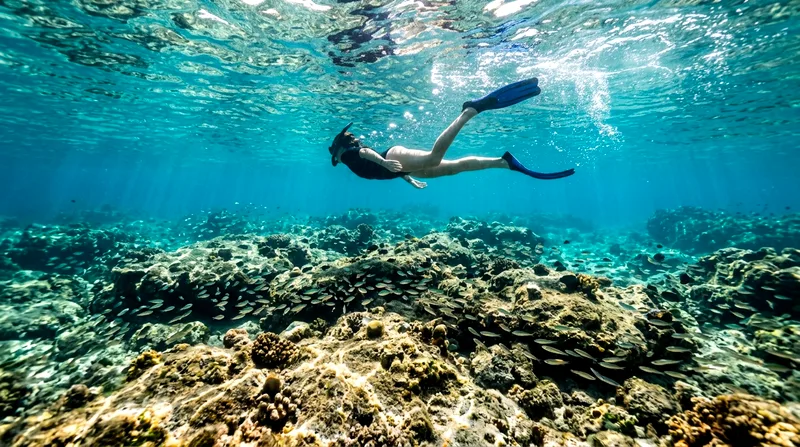
Snorkelling needs only a mask, snorkel, and fins, and keeps you at the surface, rarely more than 2-3 metres down even for confident free-divers. Diving requires a regulator, tank, buoyancy vest, and wetsuit — all normally provided by the dive centre — and takes you to depths where visibility and marine life genuinely change. Water clarity on the Amalfi Coast averages decent rather than exceptional; compare it honestly to Ischia's volcanic thermal waters or the rockier, clearer coves of Cinque Terre further north, and the Amalfi Coast doesn't win on raw visibility. What it offers instead is dramatic underwater topography — submerged caves, the drop-offs near Li Galli, and the protected zone around Punta Campanella, which sits within a marine protected area with tighter rules on boat anchoring and fishing.
Cost and time commitment
A group boat snorkelling trip typically runs half a day, sometimes with lunch included, and costs are generally in the lower range of water-based excursions on this coast. A PADI Discover Scuba session takes about half a day as well but costs noticeably more because of equipment and instructor ratios — expect this to run roughly double or more what a snorkelling boat trip costs. Full certification is the biggest investment: three to four days of your trip, plus a course fee that's a meaningful chunk of a travel budget. Check current prices and course dates directly with dive centers before booking, since these vary by season and group size.
Tour Categories Compared
Here's where the choices actually get made. Four categories cover nearly everything on offer between Salerno and Positano.
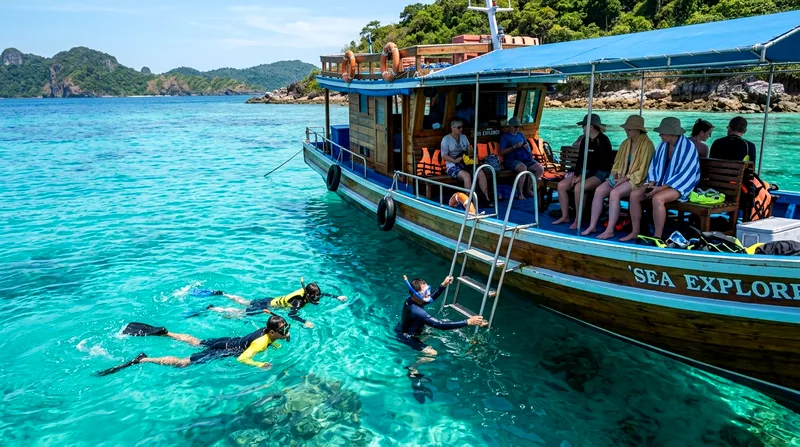
Boat snorkelling suits most travelers, while PADI diving trips cost more but reach deeper, more interesting terrain.
Amalfi Coast snorkelling and diving tour categories compared by cost, depth, and group size
| Tour Type | Typical Duration | Relative Cost | Typical Depth | Group Size | Certification Needed |
|---|---|---|---|---|---|
| Boat snorkelling | 3-5 hours | Low-mid | Surface, 2-3m | 10-20 people | No |
| Shore snorkelling | 1-3 hours (flexible) | Low (gear rental only) | Surface, 1-2m | Self-paced/solo | No |
| PADI Discover Dive | 3-5 hours | Mid-high | 6-12m | 1:4 ratio typical | No |
| PADI Open Water course | 3-4 days | High | Up to 18m | 1:4 ratio typical | Yes, by end of course |
| Private boat tour | 3-6 hours | High | Surface, 2-3m | Private (2-8 people) | No |
Figures are typical ranges based on common industry practice; confirm exact inclusions, depths, and group sizes with the operator before booking.
Boat-based snorkelling trips
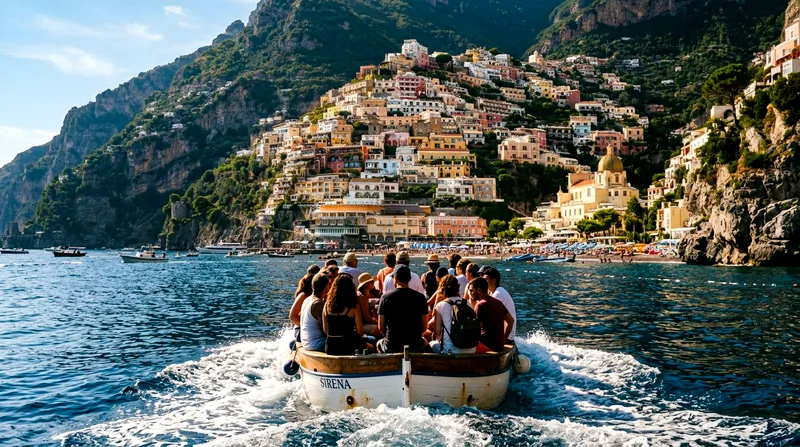
These are the default option and for good reason — a small boat (often a gozzo, the traditional wooden fishing boat) picks up from Positano, Amalfi, or occasionally Salerno, and stops at two or three coves inaccessible by road, often including a pass near the Emerald Grotto or Furore Fjord. Typical duration is 3-5 hours. The downside: on busy summer days, popular coves get crowded with multiple boats arriving at once, and some itineraries spend more time cruising for views than actually anchored for swimming — ask how many swim stops are included before booking, not just the total duration.
Shore-based snorkelling
Cheaper and more flexible, shore snorkelling means renting or bringing gear and walking into the water from a beach — Marina Grande in Positano or the pebble beaches near Praiano work reasonably well. You skip the boat fee entirely and can stay as long as you like, but visibility close to shore is generally lower than out past the headlands, and you miss the sea-cave and grotto stops that make the boat trips worthwhile. I wouldn't recommend this as your only Amalfi Coast water activity — fine as a free afternoon add-on, disappointing as the main event.
PADI-certified diving experiences
Dive centers based around Amalfi, Positano, and occasionally Salerno run both introductory dives and full certification tracks. Look specifically for PADI affiliation if certification matters to you internationally — it's the most widely recognized standard and means your qualification transfers to dive sites elsewhere, from the Red Sea to Southeast Asia. Sites near Capri's Blue Grotto area and the reserve at Punta Campanella are commonly used for certified dives; some centers also run trips toward Li Galli. Expect smaller groups than snorkelling boats — usually a 1:4 or tighter instructor-to-diver ratio for beginners, which is non-negotiable for safety.
Private vs. group tours
Private boat snorkelling trips cost considerably more than joining a shared group boat, but you control the stops, timing, and pace — worth it for couples on an anniversary trip or families who don't want to share a small boat with strangers. Group tours are the budget-friendly default and fine for solo travelers wanting company. The trade-off on group tours is less flexibility: if the group wants to linger at one cove, you linger too, even if you'd rather move on to the Emerald Grotto or back toward Amalfi for lunch.
What to Look for When Booking
Booking an Amalfi Coast snorkelling tour online is easy; booking a good one takes a bit more reading. The listings tend to look similar at a glance — boat photo, smiling group, a price — so the differences show up in the fine print.
Inclusions and equipment quality
Check whether mask, snorkel, fins, and life jacket are included or rented separately on arrival — some budget listings quote a low headline price then charge extra for gear on the dock. Wetsuits matter more than people expect even in August; water temperature drops noticeably below the surface, and a few tours skip wetsuits entirely to cut costs. For diving, confirm the tank, weights, and BCD (buoyancy vest) are included, since these are standard inclusions at any reputable PADI center and their absence is a red flag.
Group size and guide ratios
Ask directly how many guides supervise how many swimmers. A boat carrying 20 snorkellers with one guide in the water is a very different experience from one with two guides and 12 guests — especially with children or weaker swimmers aboard. For diving, a 1:4 instructor ratio for beginners is standard practice; anything looser isn't worth the risk, regardless of price.
Cancellation and weather policies
Sea conditions near Punta Campanella and around the Li Galli Islands can turn choppy with little warning, and operators do cancel or reroute trips. Read the cancellation policy before paying — look for free rescheduling or full refund if the operator cancels for weather, which is standard among reliable companies. Be wary of any listing with a strict no-refund policy regardless of conditions; that's a sign to book elsewhere.
When to Book Your Tour
Timing affects both what you'll see underwater and how easily you can get a spot at all.
Seasonal conditions and visibility
June through September offers the warmest water and most stable conditions, with sea temperatures generally comfortable enough to skip a wetsuit for snorkelling, though divers typically still wear one. July and August bring the clearest average visibility but also the most boat traffic around popular coves near Positano and the Emerald Grotto — expect company at every stop. Late May and early October are worth considering if you want fewer crowds and don't mind slightly cooler water; conditions are usually still workable, though operators scale back schedules and some dive centers pause certification courses outside peak months.
Advance booking recommendations
Book boat snorkelling trips three to seven days ahead in peak season — small boats sell out, especially ones departing directly from Positano. PADI certification courses need more lead time, ideally two to three weeks out, since they require coordinating pool sessions and instructor availability across several consecutive days. If your itinerary also includes day trips to Capri, Ravello, or Pompeii, book your water activity around those dates first — boat tours are the most weather-dependent piece of an Amalfi Coast itinerary and benefit from flexible days on either side.
Frequently asked questions
What's the difference between snorkelling and diving on the Amalfi Coast?
Snorkelling keeps you at the surface with basic gear and no training required, suited to coves near Positano and Praiano. Diving takes you 6-18 metres down using a tank and regulator, revealing more marine life and underwater topography, but requires either a guided introductory dive or full PADI certification.
Do I need certification to dive on the Amalfi Coast?
No — PADI Discover Scuba Diving sessions let uncertified visitors dive under direct instructor supervision, usually to around 6-12 metres, in a single half-day session. Full independent diving at dive sites around Li Galli or Punta Campanella requires PADI Open Water certification or equivalent.
What's the best time of year for snorkelling and diving?
June through September gives the warmest water and most reliable boat schedules, with July-August offering the clearest visibility but busiest coves. Late May and early October trade a bit of warmth for noticeably fewer crowds at popular spots near the Emerald Grotto and Furore Fjord.
Are snorkelling tours suitable for beginners and children?
Yes, most boat snorkelling tours welcome beginners and children roughly 6 and up, provided life jackets are supplied and a guide enters the water with the group. Avoid tours marketed around cave swimming or the Emerald Grotto's narrow passages for young or nervous swimmers.
What should I check before booking a tour?
Confirm what's included — mask, fins, wetsuit, life jacket — and ask about guide-to-swimmer ratios before paying. Read the cancellation policy carefully; reliable operators offer refunds or rescheduling for weather-related cancellations, which happen fairly often near exposed points like Punta Campanella.