
Amalfi Coast Private Driver Tour: Full-Day Hire Guide
Hire a private driver for the Amalfi Coast. Compare full-day tour routes, pricing models, and booking tips for personalized coastal exploration.
8 min read · 9 Oct 2026
Getting Around the Amalfi Coast
Getting around the Amalfi Coast: compare SITA buses, ferries, private transfers, rental cars and taxis to find the best option for your trip.
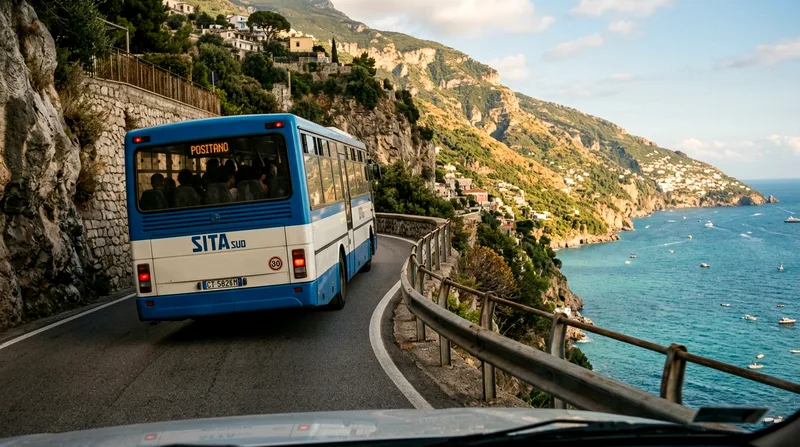
The Amalfi Coast's dramatic cliffside roads and scattered villages make transportation planning essential for a smooth visit. The SS163, the single road linking Sorrento to Salerno, has one lane in each direction for most of its length, which means a 30km drive can take well over an hour once you factor in tour buses, delivery trucks, and the occasional scooter squeezing past at a blind curve. Getting around the Amalfi Coast isn't about finding one perfect method — it's about matching transport to the specific leg of your trip.
If you're staying in Positano and want to reach Amalfi town for dinner, a ferry beats sitting in traffic. If you're arriving from Naples with suitcases and two kids, a private transfer beats wrestling with a public bus timetable. This guide breaks down the five realistic options — SITA buses, private transfers, ferries, rental cars, and taxis — with honest costs, timings, and the situations where each one actually makes sense.
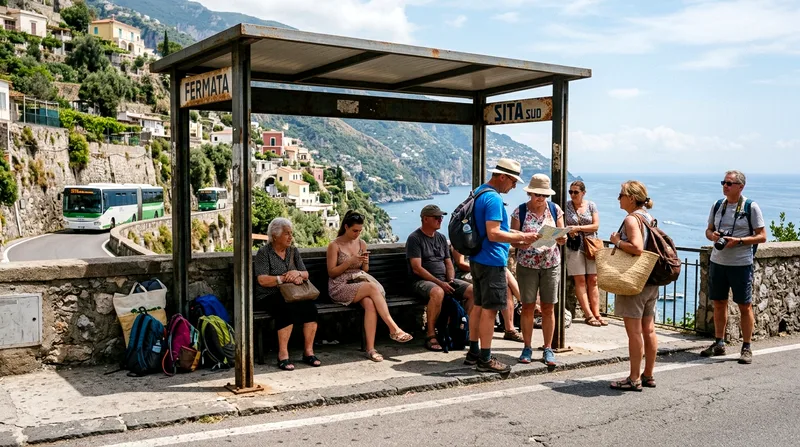
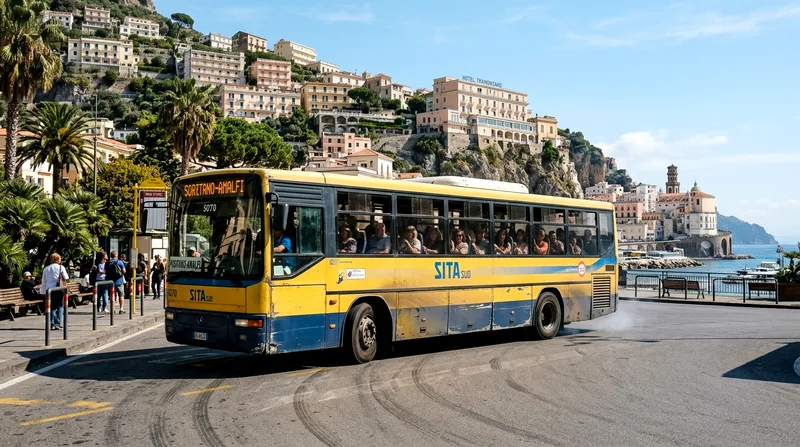
SITA Sud operates the public bus network that links every town along the coast, and it's the backbone of budget travel here. A ticket between Sorrento and Amalfi costs around €2.50-€5 depending on zones, and the buses run with reasonable frequency in high season — often every 30-40 minutes on the main Sorrento-Amalfi-Salerno corridor. The trade-off is comfort. Buses fill up fast in July and August, and you may watch two or three pass by, already standing-room-only, before you get a seat.
I'd recommend the SITA bus for short hops and for travelers who enjoy the ride itself — the coastal views from the right-hand side heading toward Amalfi are some of the best you'll get without paying for a boat tour. What I wouldn't recommend is relying on it for a tight schedule, like catching a flight or a pre-booked boat tour. Breakdowns, roadworks, and summer traffic jams around Positano and Praiano are common enough that buffer time is non-negotiable.
The core SITA route runs Sorrento–Positano–Amalfi–Ravello (via a connecting bus up the hill)–Salerno, hitting every major stop tourists want. Smaller villages like Praiano and Furore are served by the same line, since there's really only one road to drive. A separate branch connects Amalfi to Ravello, roughly 20 minutes up a steep, winding road — walking it is not realistic for most people, so this short bus leg or a taxi is effectively mandatory. Buses do not run directly between Positano and Capri or Ischia; those legs require a ferry.
Tickets aren't sold on board — you buy them beforehand from tobacco shops (tabacchi), newsstands, or some bars, identifiable by the SITA or "biglietti" sign. A single ticket is typically valid for a set time window (around 90-100 minutes) rather than a single ride, and day passes exist for travelers planning multiple stops. Buy a few extra tickets when you find a shop that sells them, since not every town has one obviously located near the bus stop, and running out mid-trip means a scramble.
A private transfer is the most predictable way to move along the coast, and for families or anyone with luggage, it's often worth the premium. You book a car (sedan, minivan, or larger vehicle for groups) with a fixed price agreed in advance, a driver who knows the road, and a pickup time that doesn't depend on a public timetable. Expect a transfer from Naples Airport to Positano or Amalfi to take roughly 75-90 minutes without traffic, though summer afternoons can stretch that to two hours or more.
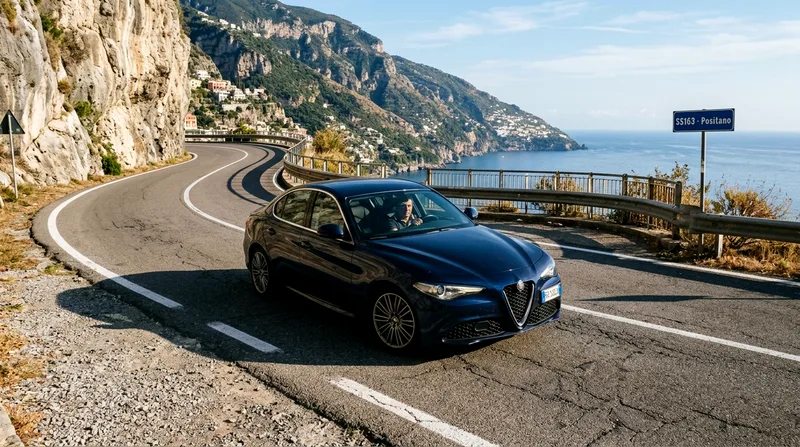
The obvious downside is cost — a private car between Naples and Positano generally runs several times what the SITA bus would cost, though split across four people in a minivan it starts looking more reasonable than four individual taxi fares. I'd skip the private transfer for very short hops between neighboring towns; that's money better spent on a ferry ticket or a bus fare. Where it earns its price is airport runs, port transfers, and any trip where missing a flight isn't an option.
Naples International Airport (Capodichino) is the main gateway, and most visitors arrange either a transfer directly to their hotel or a combination of transfer plus ferry from Salerno or Naples port in summer. Salerno's port also receives some cruise traffic, and transfers from there into Amalfi or Ravello are considerably shorter — often under an hour — than from Naples. Book transfers with enough lead time that the driver can track your flight; reputable services build in a buffer for delays rather than charging extra for waiting.
For a single day covering Positano, Amalfi, and Ravello, a private driver who waits at each stop removes the single biggest headache: parking. You pay for the driver's time, typically by the hour or for a half/full day, but you avoid three separate bus connections and the steep walk up to Ravello's center. Compare this against a ferry-and-bus combination, which costs far less but requires more flexibility and tolerance for queues at the dock in August.
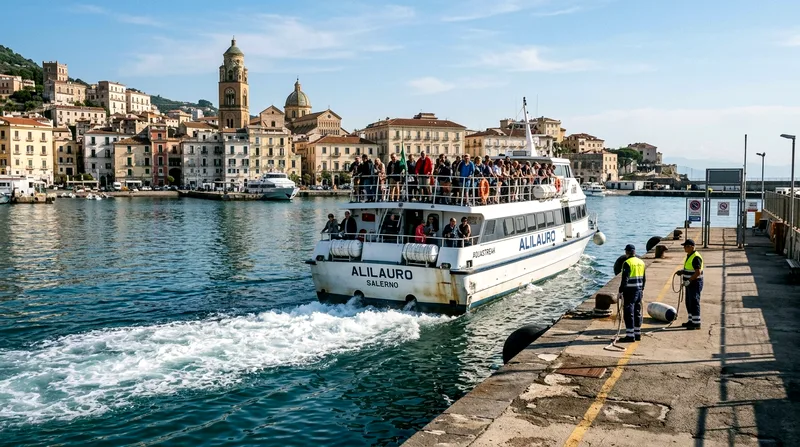
Ferries are, in my view, the most underrated way to get around the Amalfi Coast, and for travelers going between Positano, Amalfi, Salerno, or across to Capri, they should be the default rather than the backup plan. Unlike the SS163, the Tyrrhenian Sea doesn't get traffic jams. A Positano-Amalfi hop by hydrofoil or fast ferry takes around 25-35 minutes, compared to 45 minutes to over an hour by road depending on season and traffic.
The catch is that ferries are seasonal and weather-dependent. Rough seas in the off-season — particularly from November through March — can cancel routes with little notice, and schedules thin out considerably outside the April-to-October window. Don't plan an off-season trip assuming you'll hop between towns by boat the way you might in July.
Ferries and SITA buses handle most short coastal hops cheaply, while private transfers and taxis trade cost for reliability and comfort.
Amalfi Coast transport options compared: cost, time, and best use
| Option | Typical Cost | Positano-Amalfi Time | Best For | Reliability |
|---|---|---|---|---|
| SITA Bus | Low (a few euros per ride) | 45-60 min | Budget travel, short hops | Moderate; traffic-dependent |
| Ferry/Hydrofoil | Moderate | 25-35 min | Scenic, time-sensitive trips | High in season; seasonal gaps |
| Private Transfer | High | 40-50 min | Airport runs, families, day trips | Very high |
| Rental Car | Moderate plus parking fees | 40-60 min | Independent exploring off-season | Depends on driver skill, traffic |
| Taxi | High for distance | 40-50 min | Short trips, late arrivals | High, limited availability at peak times |
Typical figures; actual times and prices vary by season, traffic, and operator, so confirm current options before you book.
Peak season (roughly May through September) sees frequent departures connecting Salerno, Amalfi, Positano, Sorrento, and Capri, often with a dozen or more sailings a day on the busiest legs. Outside this window, routes reduce sharply, and some — particularly direct Capri or Ischia connections from smaller towns — may stop entirely until spring. If your trip falls in shoulder season (April or October), check which routes are actually operating rather than assuming the summer network applies.
Hydrofoils are faster and pricier, skimming across choppier water with less rocking, which matters if anyone in your group gets seasick. Slower ferries cost somewhat less and give you more time on deck for photos of the cliffs from the water — a perspective buses simply can't offer. For a scenic one-off, like Amalfi to Capri, I'd pay for the slower boat if the schedule allows; for a practical commute, like Positano to Salerno to catch a train, the hydrofoil's speed wins.
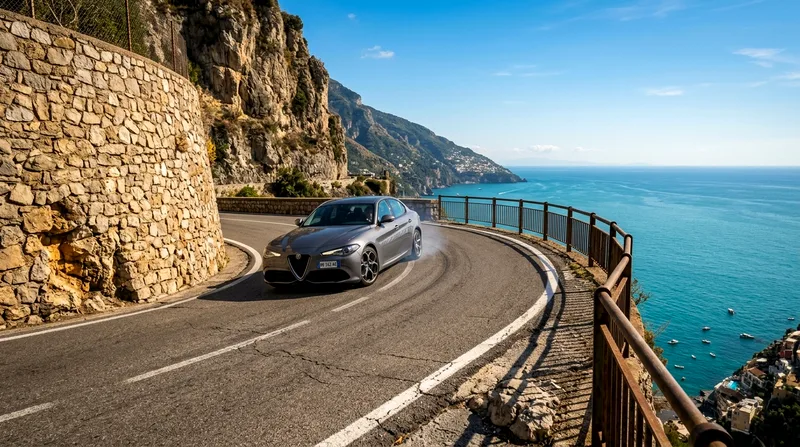
Renting a car on the Amalfi Coast sounds appealing until you've seen the SS163 in person. The road is narrow, often one lane effectively shared in both directions around blind curves, and locals drive it with a confidence that visitors — especially those used to wider roads — often find unnerving. I wouldn't recommend a rental for anyone whose primary goal is relaxation; you'll spend more mental energy watching mirrors than looking at the sea.
Where a rental does make sense is for travelers basing themselves in Sorrento or on the Sorrentine Peninsula and wanting to explore inland areas, or for those visiting in shoulder season when roads are quieter and ferries run less often. A scooter is more maneuverable in traffic but exposes you to the same narrow-road risks with less protection — fine for confident, experienced riders, less so for first-timers.
Parking is the real cost of a rental here. Positano and Amalfi have limited public parking, often in multi-story garages charging by the hour at rates that add up fast over a full day — frequently €20-30 for several hours in peak season. Many hotels don't offer on-site parking and instead arrange a nearby garage, so confirm this before booking if you're driving. Street parking in village centers is rare and often restricted to residents.
A rental earns its keep if you're planning to venture beyond the coast itself — to Paestum's ruins, inland hill towns, or a loop through the Sorrentine Peninsula's quieter villages — where public transport is thin. For a trip confined to Positano, Amalfi, and Ravello, I'd skip it; the combination of buses and ferries covers that triangle more cheaply and with far less stress.
Taxis fill the gap between the SITA bus and a private transfer — faster and more flexible than the bus, cheaper than booking a dedicated car service for multi-stop days. Ride-sharing apps like Uber don't operate in any meaningful way along the coast, so don't plan around them; local taxis, arranged by phone, through your hotel, or at a rank, are the standard.
Fares aren't metered the way they are in Naples or Rome; they're typically negotiated or fixed by distance before you get in, so confirm the price upfront to avoid surprises. A short ride within Positano or from a hotel down to the beach might run €15-25, while Amalfi to Ravello could cost more given the climb. Tipping isn't expected the way it is in the US — rounding up is appreciated but not required.
Availability tightens considerably in August, particularly late evening when restaurant crowds are heading back to hotels scattered across hillsides. If you need a taxi at 11pm from a restaurant in Praiano, call ahead rather than hoping to flag one down — there's often no rank nearby, and demand outstrips supply during peak dinner hours.
Taxis make the most sense for vertical trips — getting from a hillside hotel down to the harbor, or back up after dinner — where walking means a genuinely steep climb and the bus doesn't run late enough. They're also the practical choice for a late flight or train arrival into Naples or Salerno when private transfers would need advance booking you didn't have time for.
The SITA bus is the cheapest option by far, with single tickets typically costing a few euros depending on distance. Ferries cost more but aren't expensive either, and for trips like Positano to Amalfi, the time saved often justifies the small difference in price over sitting in summer road traffic.
Yes, rentals are available in Naples, Sorrento, and Salerno, but driving the SS163 yourself means narrow lanes, constant oncoming traffic, and scarce, often pricey parking in towns like Positano and Amalfi. It makes more sense for exploring inland areas than for navigating the coast road itself.
No. Ferry service is heaviest from roughly April through October and drops sharply in winter, with some routes suspended entirely due to rough winter seas. If you're visiting between November and March, plan on buses and private transfers as your main options.
It's manageable but demanding — the SS163 has frequent hairpin turns, minimal shoulders, and heavy tour bus traffic in season. Experienced mountain or coastal drivers generally handle it fine; nervous drivers or those unfamiliar with manual transmissions and narrow European roads may find it stressful enough to prefer a private transfer instead.
The most common options are a private transfer (around 75-90 minutes direct to hotels in Positano or Amalfi), a combination of airport bus or taxi to Naples port or Salerno followed by a ferry in season, or train to Sorrento or Salerno plus a SITA bus or taxi for the final leg.
Hire a private driver for the Amalfi Coast. Compare full-day tour routes, pricing models, and booking tips for personalized coastal exploration.
8 min read · 9 Oct 2026
Amalfi Coast bus vs ferry vs taxi compared: costs, travel times, comfort, and crowds, so you can pick the right way to get around.
7 min read · 9 Oct 2026

Compare Rome to Amalfi Coast transfers: train + car combos, direct shuttles, luggage handling & booking tips for smooth travel.
9 min read · 9 Oct 2026

Compare Naples to Amalfi Coast transfer options: private car, shuttle, train + bus, and rental. Speed, cost, and family suitability ranked.
10 min read · 9 Oct 2026
Compare private car, minivan & luxury transfers to Amalfi Coast from Naples airport, train stations & Rome. What to book, when, and what to avoid.
9 min read · 9 Oct 2026