
SITA Bus Pass Amalfi Coast: How to Buy & Use the Unico Costiera
How to buy and use the Unico Costiera SITA bus pass on the Amalfi Coast. Compare ticket options, routes covered, and savings versus single fares.
8 min read · 9 Oct 2026

Tickets & passes
Complete guide to Amalfi Coast tickets and passes. Compare attraction entries, transport passes, and combo deals. Book official channels with confidence.
5 guides
Unlike Rome or Naples, the Amalfi Coast has no single official "Amalfi Coast Card" covering every attraction and bus ride. When people search for Amalfi Coast tickets and passes, they're usually looking at three separate categories: individual attraction entries (Villa Rufolo, Villa d'Este, the Amalfi Cathedral cloister), regional transport tickets (SITA buses, hydrofoil services between Salerno, Amalfi, Positano, and Capri), and the occasional bundled combo ticket sold by a specific attraction or operator, not the whole region.
This matters because it changes how you plan. You're not buying one pass and walking through turnstiles all week — you're assembling a small stack of separate bookings, each with its own rules, refund policy, and entry window. That's more admin than a place like Cinque Terre, where the Cinque Terre Card bundles trains and trail access into one product. The Amalfi Coast's fragmented system is partly geography — the towns are strung along one narrow road with no single transit authority running everything — and partly because most of the big draws (the coastline itself, Positano's beaches, Atrani's piazza) are free to look at and walk through.
What's genuinely ticketed: Villa Rufolo and Villa Cimbrone in Ravello, the Amalfi Cathedral's cloister and museum, Pompeii and Herculaneum (if you're basing in Sorrento or Salerno and day-tripping), and boat excursions to Capri. What's excluded from any pass you'll find: parking, walking tours, restaurant reservations, and — importantly — guaranteed seats on SITA buses, which don't sell advance seat reservations at all.
Villa Rufolo's entry ticket, priced in the range of roughly €7-8 for a standard adult admission (confirm on the official Ravello Festival or villa website, as prices are adjusted periodically), gets you into the gardens and the medieval tower with its coastal views. Villa d'Este in Ravello is a different story — it's a private hotel garden, not a public monument, so forget conflating it with Villa Rufolo when you're booking. The Amalfi Cathedral complex charges a modest combined fee for the cloister, crypt, and museum, usually handled at a ticket desk rather than online. Boat tickets — whether hydrofoils between Amalfi and Positano or a day excursion to Capri — are sold by the ferry companies directly, and these are the closest thing to a "must pre-book" item during July and August.
No pass here covers restaurant terraces, private beach clubs in Positano or Praiano, or the Path of the Gods hike, which is free and unticketed. Parking in Amalfi, Positano, or Ravello isn't bundled into anything either — expect to pay separately at a garage, often €3-5 per hour, since street parking along the coastal road is nearly nonexistent. Don't assume a "combo ticket" sold by one villa includes a bus ride to get there; check the fine print, because most don't.
The core decision isn't which pass to buy — it's whether to prioritize attraction tickets or transport tickets, because they solve different problems. Attraction tickets save you from standing at a counter; transport tickets save you from being stranded. On a coast where the only road between Sorrento and Salerno is a two-lane cliffside route often jammed with tour coaches, the transport side deserves more of your attention than most guides admit.
SITA buses run the full coastal route and are the backbone of independent travel here, but they don't offer online reservations — you buy a paper or app-based ticket (via the SITA app or at tobacco shops, "tabacchi") valid for a set time window, then board and hope there's standing room. In August, buses from Sorrento to Positano can pass by already full. That's a real planning risk nobody sells a ticket to fix, except by advising you to travel early morning or use the hydrofoil instead.
Hydrofoil services between Salerno, Amalfi, Positano, Capri, and Sorrento are a better bet for midday travel in peak season, and tickets can be bought online in advance through the ferry operators' own sites. They cost more than the bus — often three to four times as much — but you get a guaranteed seat and a view, with none of the standing-room scrum.
Expect to pay per site, not per day. Villa Rufolo and Villa Cimbrone each have their own ticket, their own hours, and no shared discount between them despite being a ten-minute walk apart in Ravello. The Amalfi Cathedral cloister ticket is cheap, typically a few euros, and rarely needs advance booking outside of Easter week or August. Pompeii, if you're routing through Salerno or Sorrento, has its own official ticketing site run by the archaeological park — buy there directly rather than through a third-party reseller charging a markup for the same entry.
There's no unified hop-on-hop-off bus network covering the whole Amalfi Coast the way Rome or Florence have tourist loop buses. What exists is the regular SITA public bus line plus seasonal hydrofoil routes. Some private operators sell "unlimited day" boat-hopping tickets between Amalfi, Positano, and Salerno, which can be worth it if you're visiting three towns in one day and want to skip the bus entirely — but compare the unlimited price against buying single hydrofoil legs, since for two stops the single tickets are often cheaper.

Combo tickets on this coast tend to be narrow — a Ravello villa duo, a Pompeii-plus-Herculaneum bundle, or a boat tour that includes a stop at the Li Galli islets near Positano. They're worth buying when the combo genuinely saves a walk back to a ticket booth, not just because "combo" sounds efficient. A Pompeii and Herculaneum combined ticket, for instance, is worth it if you're actually visiting both; it's dead weight if you only have time for one.
Multi-day passes are rare here compared to transport cards in Naples (the Campania Artecard covers museums and some transport across the wider region, including Pompeii and Herculaneum, and is worth investigating if your trip spans Naples, Salerno, and the coast). For the Amalfi towns themselves, there's little reason to buy multi-day anything unless you're basing yourself in one town and doing repeat visits to the same villa or museum, which most travelers don't do.
Transport tickets need the most advance planning in peak season, while most attraction entries can still be bought same-day outside August.
Amalfi Coast tickets and passes compared by cost, booking need, and best use
| Ticket/Pass | Typical Cost | Book Ahead? | Best For |
|---|---|---|---|
| Villa Rufolo entry | approx. €7-8 | Not usually needed | Ravello day visits |
| Amalfi Cathedral cloister | Few euros | No | Quick Amalfi town stop |
| SITA bus ticket | A few euros per leg | No online booking available | Budget travel, off-peak |
| Hydrofoil (Amalfi-Positano) | Moderate, several times bus fare | Yes, in July-August | Guaranteed seat, scenic transfer |
| Pompeii official ticket | Moderate, published on official site | Recommended in peak season | Day trip from Salerno/Sorrento |
| Campania Artecard (3 or 7 day) | Fixed regional price | Yes, online | Multi-stop trips including Naples |
Prices are approximate and change periodically; always confirm on the official attraction or transport website before booking.
If you're staying three or more nights and plan to dip into Naples or Pompeii as part of the trip, the Campania Artecard (sold in versions covering 3 or 7 days) can pay for itself through combined museum entry and regional train discounts — check the official Artecard site for current inclusions, since the list of participating sites changes. For a stay confined to Positano, Amalfi, and Ravello alone, single-day tickets purchased per attraction remain simpler and usually cheaper.
Families with children under a certain age (often 18 and under, though age cutoffs vary by site) frequently get free or reduced entry to villas and archaeological parks — always ask or check the official site, since this isn't automatic and requires ID at the gate. Solo travelers and couples moving fast between towns benefit most from hydrofoil tickets bought a day ahead in July and August. Senior travelers, EU citizens over 65, sometimes qualify for reduced museum admission at state-run sites like Pompeii — bring a passport as proof.
Buy directly from the source whenever one exists. Villa Rufolo and Villa Cimbrone sell tickets through their own official sites; Pompeii and Herculaneum are managed by the Parco Archeologico di Pompei, which runs its own ticketing portal and explicitly warns against third-party markups. Hydrofoil operators running routes to Capri, Positano, and Salerno each have their own booking sites — there isn't one unified portal, so if you're doing a multi-stop day, you may end up booking two or three separate company sites.

Reseller sites aggregating "skip the line" tickets do exist for Pompeii and some Naples museums, and they can be convenient, but they usually add a service fee of a few euros per ticket. That's a reasonable trade if it saves you from a sold-out official allocation during August, but check the official price first so you know what markup you're paying.
Start with the attraction's own domain — Ravello's villas, the Amalfi Cathedral, and Pompeii's archaeological park all maintain official ticketing pages, usually with an Italian and English toggle. For regional transport, the SITA Sud website and app handle bus tickets, while hydrofoil companies serving the Amalfi-Positano-Capri-Salerno routes list schedules and fares directly — schedules shift seasonally, with far fewer sailings outside April through October, so don't assume a winter timetable matches summer.
For boat tours — a half-day Capri excursion from Positano, or a sunset cruise along the Praiano coastline — book through the boat operator's own site or a reputable regional booking platform rather than a street kiosk tout in Amalfi's harbor. Street-sold tours sometimes skip cancellation policies entirely, leaving you with no recourse if weather cancels the trip.
For most attraction tickets outside peak summer, no — you can walk up to Villa Rufolo or the Amalfi Cathedral and buy on the spot without much of a wait. The exception is Pompeii, which draws large cruise-excursion crowds regardless of season, and hydrofoils in July and August, when boats sell out by midday for same-day departures. If your trip falls in June through September, buying hydrofoil and Pompeii tickets 2-4 days ahead is a sensible hedge, not an overreaction.
Booking ahead in peak season buys you certainty, not speed — you still arrive at the dock or gate at the scheduled time, but you're not gambling on availability. This matters most for travelers with a tight return flight or a connecting train from Naples or Salerno, where missing a hydrofoil because it sold out could cascade into a missed flight. It matters less for flexible travelers staying a full week in Praiano or Atrani with no fixed onward plans.
If you're counting euros, skip advance "skip the line" add-ons for sites that rarely have lines outside August — Villa Cimbrone and the Amalfi Cathedral fall into this category most of the year. Put your advance-booking budget toward hydrofoil tickets instead, since a missed boat costs you hours, not minutes. Budget travelers comparing this coast to Cinque Terre should know the math is different: Cinque Terre's card is genuinely cost-effective because train hops are short and frequent, while here the hydrofoil premium over the bus buys a real logistical advantage, not just comfort.
Not for most attractions outside July and August. Villa Rufolo, the Amalfi Cathedral cloister, and similar sites rarely sell out. The real advance-booking priority is hydrofoil transport in peak summer and Pompeii entry year-round, since both face heavier crowd pressure than local villas or churches.
There's no official unified "Amalfi Coast city pass" — that's a common misconception. What exists are single-site tickets (Villa Rufolo, the cathedral) and the broader Campania Artecard, which covers museums and some transport across the wider Naples-Salerno region, not the coastal towns specifically.
Generally yes for hydrofoils in peak season, where advance booking guarantees a seat. SITA buses don't offer reservable tickets at all, so there's no "pass" to buy ahead for the bus beyond a standard fare ticket purchased at a tabacchi or via the SITA app shortly before travel.
No. Skip-the-line products mainly apply to high-traffic sites like Pompeii and some Naples museums. Smaller Amalfi Coast sites — Villa Rufolo, Villa Cimbrone, the Amalfi Cathedral — typically have one ticket line and no separate fast-track option, since crowds rarely justify it outside August.
It varies by seller, so read the inclusions carefully. A Ravello villa combo might bundle Villa Rufolo and Villa Cimbrone entry; a Naples-area combo might pair Pompeii with Herculaneum. None of these typically include transport to reach the sites — confirm that separately before assuming a combo covers your whole day.
How to buy and use the Unico Costiera SITA bus pass on the Amalfi Coast. Compare ticket options, routes covered, and savings versus single fares.
8 min read · 9 Oct 2026

Buy Emerald Grotto tickets and compare boat entry vs elevator access, pricing, best visit times, and combo tours on the Amalfi Coast.
8 min read · 9 Oct 2026
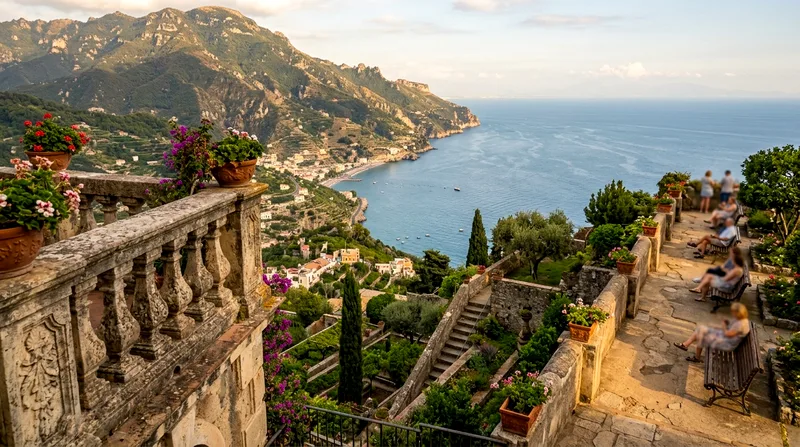
Compare Villa Rufolo and Villa Cimbrone tickets on the Amalfi Coast. Learn what's included, pricing options, and whether guided tours are worth it.
9 min read · 9 Oct 2026

Book Amalfi Cathedral tickets online. Compare cathedral, cloister & museum passes. Skip-the-line options, hours & visitor tips inside.
8 min read · 9 Oct 2026

Is the Campania Artecard worth it? Compare variants, check museum and transport inclusions, and learn how to calculate real savings before buying.
8 min read · 9 Oct 2026