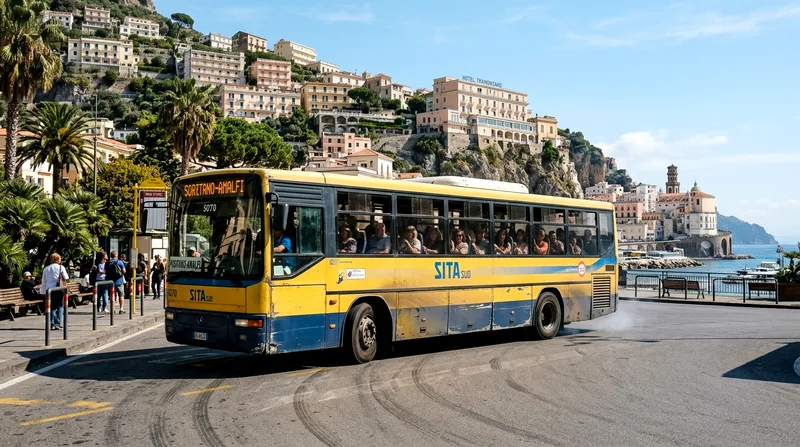
Amalfi Coast bus vs ferry vs taxi compared: costs, travel times, comfort, and crowds, so you can pick the right way to get around.
Options at a Glance
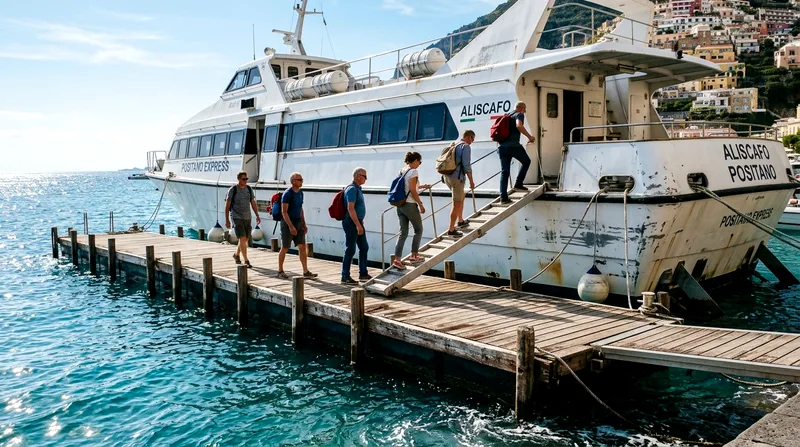
Three main transport options connect Amalfi Coast towns, each with distinct trade-offs in cost, speed, comfort, and crowds. The SITA bus is the backbone of local transport, running along the coastal road between Sorrento, Positano, Amalfi, and Salerno. Ferries operate seasonally on the water, linking the same towns plus Capri and Ravello's port at Minori or Amalfi's harbor. Taxis and private drivers fill the gaps when neither public option fits your schedule.
Picking between them isn't really an either/or decision — it's about matching the mode to the specific leg of your trip. A ferry from Amalfi to Positano in June, when the sea is calm and the road is jammed with tour buses, is an easy choice. The same trip in November, when ferry schedules thin out or stop entirely, pushes you back onto the bus or into a taxi.
SITA bus network overview
SITA Sud operates the public bus routes along the coastal road (SS163), connecting Sorrento to Salerno via Positano, Praiano, and Amalfi, with a separate branch climbing up to Ravello from Amalfi's bus terminal near the harbor. Buses run roughly every 30 to 60 minutes during the day in high season, less frequently in winter. A single ticket covering most coastal hops costs around €2.50 to €5 depending on distance, and tickets must be bought before boarding — from tobacco shops (tabacchi), newsstands, or ticket machines, since drivers won't sell them onboard. This trips up a surprising number of first-timers who try to pay cash on the bus and get turned away.
Expect standing room only in July and August, particularly on the Positano-to-Amalfi stretch. The road itself is narrow, with hairpin turns and oncoming traffic that sometimes forces a bus to reverse on a blind curve. It's unnerving the first time, routine the second.
Ferry routes and seasons
Ferries connect Salerno, Amalfi, Positano, Sorrento, and Capri, with some routes extending to Naples. Service typically runs from around Easter through October, with the fullest schedule in June through September; outside that window, routes get cut back or suspended entirely, especially the longer Salerno and Naples connections. A one-way ticket between Positano and Amalfi generally runs €10 to €20, while longer hops like Sorrento to Capri cost more.
Rough seas occasionally cancel sailings with little notice, which matters if you're booking a tight connection to a flight or train from Naples. Hydrofoils and regular ferries both operate on the Tyrrhenian Sea routes, with hydrofoils slightly faster but with less deck space for photos.
Bus vs Ferry vs Taxi: Head-to-Head
Laid out side by side, the differences are less about which option is "better" and more about which trade-offs you're willing to accept on a given day.
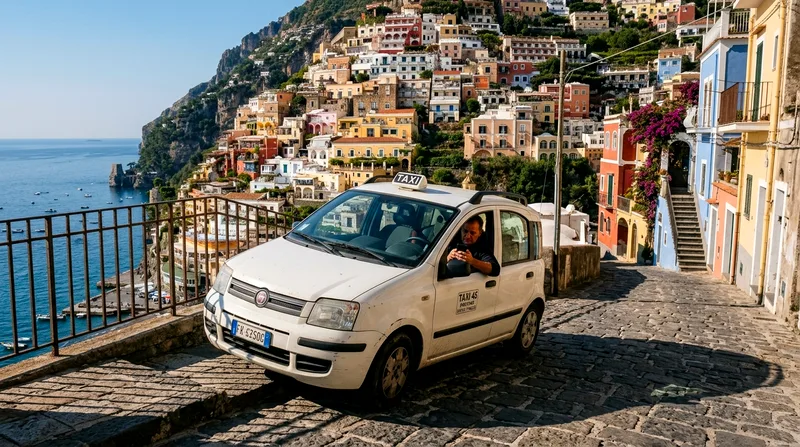
Ferries offer the best views and least stress, buses are the cheapest, and taxis win on speed and flexibility when money isn't the main concern.
Amalfi Coast bus vs ferry vs taxi compared by cost, time, and comfort
| Option | Typical cost (one-way) | Travel time (Positano–Amalfi) | Comfort level | Best for |
|---|---|---|---|---|
| SITA bus | €2.50–€5 | 50–65 min | Crowded in summer | Budget travelers, reaching Ravello |
| Ferry | €10–€25 | 20–25 min | High, open-air | Views, avoiding winding roads |
| Taxi | €60–€90 | 25–40 min | High, private | Families, luggage, time pressure |
Typical figures; ferry schedules and taxi rates vary by season and operator, so check current prices and timetables before you travel.
Cost comparison
The SITA bus is the clear budget winner at roughly €2.50 to €5 per ride, and a day pass (often called a Costiera Sita Sud ticket) covering unlimited rides for 24 hours costs around €10 to €12 — worth it if you're hopping between three or more towns in a day. Ferries sit in the middle, typically €10 to €25 per leg depending on distance and operator. Taxis are the most expensive by a wide margin: a trip from Positano to Amalfi can run €60 to €90, and Sorrento to Positano often exceeds €90 to €120, though exact rates depend on the driver and whether you negotiate upfront, which you should always do before getting in.
If you're traveling as a family of four or more, the taxi cost per person can actually rival the bus once you split it, especially over shorter hops.
Travel time and convenience
A taxi from Positano to Amalfi takes about 25 to 40 minutes depending on traffic — the same trip by bus can take 50 minutes to over an hour once you factor in stops and summer congestion. Ferries often beat both: Positano to Amalfi by boat is around 20 to 25 minutes, with no traffic to worry about. But ferries don't reach Ravello directly — you'd still need a bus or taxi up the hill from Amalfi's harbor, a climb of about 20 minutes by car.
Convenience tips toward taxis for door-to-door trips with luggage, especially to and from Sorrento train station or Salerno, where a bus transfer with suitcases on crowded steps is genuinely unpleasant.
Comfort and crowds
Buses get packed July through early September, and standing for 45 minutes on switchback turns is not everyone's idea of a good time — plenty of online complaints about Amalfi Coast travel center on exactly this. Ferries offer open-air seating, sea breeze, and no winding roads, making them the most comfortable option for anyone prone to carsickness or anxious about cliffside driving. Taxis offer the most personal space and no crowd issues at all, which is why they're worth the premium for travelers with mobility limitations or small children who need a car seat.
Views and experience
Ferries win here, no contest. Approaching Positano from the water, with its pastel houses stacked up the hillside, is a far better introduction than seeing it through a bus window while gripping the seat in front of you. The bus does offer glimpses the ferry can't — closer views of the terraced lemon groves and the inland stretch toward Ravello, which sits 365 meters above sea level and isn't reachable by boat at all. Taxis let you ask the driver to pull over at a scenic point, something neither bus nor ferry allows.
Who Should Choose Each Option
There's no universal answer, but your travel style narrows it down fast.
Budget travelers
If you're counting euros, the SITA bus is the obvious choice, and the 24-hour unlimited pass makes multi-stop days (Sorrento to Positano to Amalfi to Ravello) cost less than a single taxi ride. The trade-off is time and comfort — expect to stand during peak hours and to wait out a packed bus or two before boarding. Pair bus travel with an early start; the 8 or 9am departures are far less crowded than anything after 11am. Solo travelers and students tend to tolerate this better than families juggling strollers.
Comfort-focused visitors
Couples and senior travelers who want a relaxed trip should lean toward ferries whenever the season allows, reserving taxis for early morning or late evening transfers when boats aren't running. A reasonable compromise: take the ferry to Positano from Amalfi or Salerno for the scenic approach, then use a taxi for the return trip if you're tired or it's after sunset. Ravello is the exception — since it sits inland and uphill, a private taxi or the connecting bus from Amalfi's port is unavoidable, and a taxi saves considerable time and effort compared to the bus up that particular hill.
Tips for Families and Motion Sickness
The SS163 coastal road has hundreds of curves between Sorrento and Salerno, and combined with bus fumes and summer heat, it's a reliable trigger for motion sickness in both kids and adults who don't normally struggle with it.
Managing winding roads
If anyone in your group gets carsick, take the ferry for at least one leg of the journey rather than forcing the whole trip by road. For bus or taxi rides, have motion sickness medication on hand (taken 30-45 minutes beforehand, not after symptoms start), keep a window cracked, and avoid reading or looking at phones during the drive. Front seats near the driver on buses tend to pitch and sway less than seats over the rear wheels — worth asking for if the bus isn't full.
Best seats and timing
On ferries, sit toward the back or on the open upper deck if available — less engine vibration and better airflow than enclosed lower seating. On buses, the right side heading south toward Amalfi generally has better sea views, though it's also the side closer to the cliff edge, which some travelers find more unsettling rather than less. Travel midweek and before 10am or after 4pm when possible; midday departures in August routinely mean standing room only and tempers fraying in the heat.
Frequently asked questions
Is the SITA bus cheaper than a taxi on the Amalfi Coast?
Yes, by a wide margin. A SITA bus ride between towns like Positano and Amalfi costs roughly €2.50 to €5, while the same trip by taxi typically runs €60 to €90. A 24-hour SITA day pass, around €10 to €12, is worth buying if you plan to hop between three or more towns in a single day.
Which transport option has the best views?
Ferries generally offer the best views, since you see towns like Positano and Amalfi from the water as they're meant to be seen, without the distraction of winding roads. The SITA bus offers closer views of terraced hillsides and lemon groves, and it's the only way to see the inland approach to Ravello, which ferries don't reach.
Are ferries available year-round on the Amalfi Coast?
No. Ferry service typically runs from around Easter through October, with the fullest schedules in June through September. Outside that window, many routes — especially longer ones to Salerno or Naples — are reduced or suspended, so travelers visiting in winter should plan on buses and taxis instead.
What's the best option for families with young children?
Taxis are usually the easiest for families, since they avoid crowded buses and allow you to request a car seat in advance. Ferries are a good middle ground for cost and comfort when the schedule lines up with your itinerary, since open-air seating and no winding roads reduce the chance of motion sickness.
How do I avoid motion sickness on Amalfi Coast buses?
Take motion sickness medication 30 to 45 minutes before boarding, sit near the front of the bus rather than over the rear wheels, and keep your eyes on the horizon rather than on a phone or book. If symptoms are a serious concern, choose the ferry for that leg of the trip instead of the bus whenever the season and schedule allow it.