Planning a Path of the Gods hike tour? Compare guided vs self-guided options, trail difficulty, shuttle access, and best times to hike the Amalfi Coast.
What Is the Path of the Gods?
The Path of the Gods — Sentiero degli Dei in Italian — is a roughly 7.8-kilometer trail that runs along the mountains above the Amalfi Coast, connecting the village of Agerola (in the Nocelle/Bomerano area) down toward Nocelle, just above Positano. Most hikers walk it in that direction, west to east isn't standard — the Agerola-to-Nocelle route loses elevation overall, which is why nearly everyone starts high and finishes low rather than the reverse.
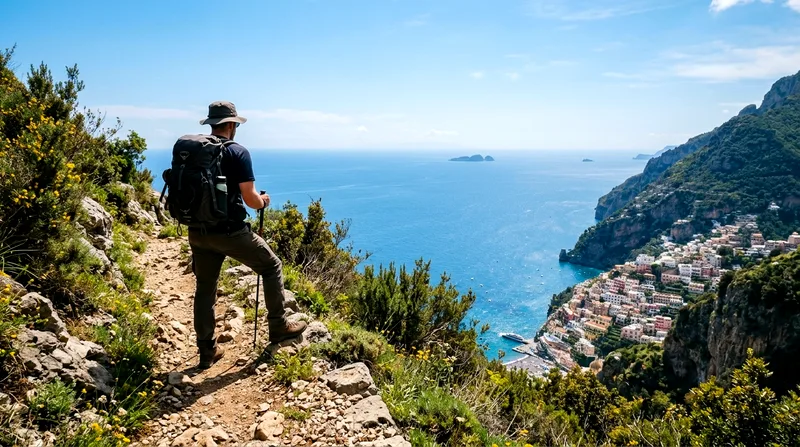
The name supposedly comes from a legend that the gods watched over sailors from this ridge, which is a nice story whether or not you believe it. What's not up for debate is the view: a near-continuous panorama of the Tyrrhenian Sea, the terraced lemon groves of Campania, and the rooftops of Praiano and Positano far below.
Route overview and scenic highlights
The classic stretch starts at Bomerano, a hamlet of Agerola sitting around 650 meters above sea level, and ends in Nocelle, a small cluster of houses above Positano reachable only by stairs or a short bus ride. The path itself is mostly a dirt and rock track hugging the cliffside, with a few short tunnels and sections where the trail narrows to less than a meter. There's no real technical climbing involved, but exposure to steep drops is constant, so this isn't a trail to rush or to walk while distracted by your phone camera. The best viewpoints cluster around the midpoint, roughly between Colle Serra and Vallone Porto, where Positano and Capri appear in the same frame on a clear day.
Why this hike ranks among top Amalfi experiences
Compare it to a boat trip to Capri's Blue Grotto or a wine tasting in Ravello — those are passive experiences. The Path of the Gods asks something of you physically, and that's exactly why it sticks with people. You earn the view. It's also one of the few ways to see the Amalfi Coast from above rather than from the water or a cliffside road, which gives a totally different sense of scale — you realize how vertical this coastline actually is. I'd rank it above the Pompeii ruins for sheer visual impact, though Pompeii wins on historical substance; they're not really comparable experiences, just two things people cram into the same week.
Self-Guided vs. Guided Tour Options
This is the real decision point, and it's less about fitness than about how much you want to deal with transport logistics. The trail itself is well marked with red-and-white CAI (Club Alpino Italiano) trail blazes and numbered signs, so getting lost isn't the main risk — missing your bus back is.
A guided Path of the Gods tour saves you transport logistics, while self-guided hiking costs far less and offers more flexibility.
Path of the Gods hike tour options compared: self-guided vs guided
| Option | Typical Cost | Duration | Transport Included | Best For |
|---|---|---|---|---|
| Self-guided with SITA bus | Bus fare only (few euros each way) | 3-4 hours hiking + bus time | No, public bus | Independent hikers, budget travelers |
| Guided small-group tour | Moderate, varies by operator | 4-6 hours total | Yes, private shuttle | First-timers wanting ease |
| Private guide/driver | Higher, varies by operator | Flexible, 4-6 hours | Yes, door-to-door | Families, seniors, small groups |
| Self-guided with taxi transfer | Bus fare + taxi fare | 3-4 hours hiking | Partial, one-way taxi option | Couples wanting flexibility without bus waits |
Costs and schedules vary by season and operator; check current prices and shuttle times before booking.
Independent hiking with maps and logistics
Going it alone means taking a SITA bus from Amalfi, Positano, or Sorrento up to Agerola/Bomerano, then walking the trail down to Nocelle, then either walking the Positano steps (around 1,700 of them, which sounds worse than it is) or catching a local shuttle down into Positano itself. You'll want a downloaded offline map — cell signal drops in and out along the ridge — and cash for water or a coffee at the one or two small bars along the route. Total cost is just bus fares, typically a few euros each way, far cheaper than any guided option. The trade-off: you're responsible for timing everything, and SITA buses on this route aren't always frequent or perfectly punctual, especially outside peak season.
Guided tour benefits and what to expect
A guided Path of the Gods hike tour typically includes transport to the trailhead, a local guide who narrates the landscape and history, and a fixed return schedule, so you're not standing at a bus stop checking timetables. Group sizes usually run from 8 to 15 people, and most tours last four to six hours including the walk itself. The appeal is logistics, not safety — this isn't a trail requiring technical guiding. If you want context on the lemon terracing, local legends, and village history, a guide adds real value; if you just want the view and the workout, you're paying for convenience you may not need. Compare current prices and group sizes before you book, since they vary by operator and season.
Trail Difficulty: Families and Seniors
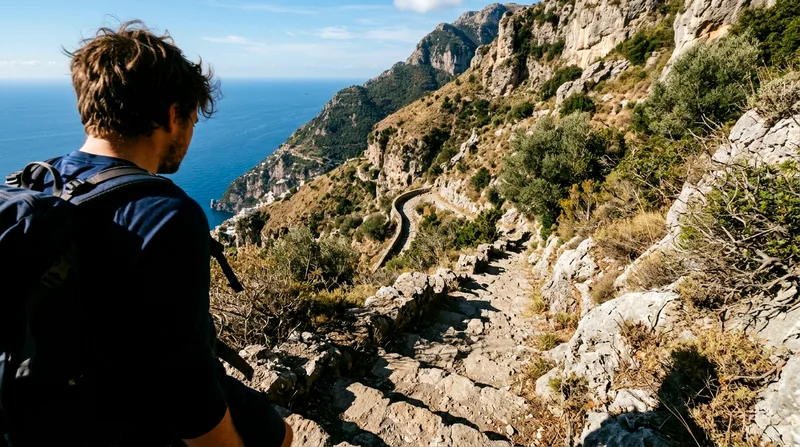
Officially, the Path of the Gods is rated as a moderate hike, not technical, but don't let that undersell it. Expect it to take three to four hours at a steady pace, not counting stops for photos — and you will stop for photos.
Elevation gain and terrain breakdown
Starting from Bomerano at around 650 meters, the trail climbs a bit before descending steadily toward Nocelle at roughly 440 meters, with a net elevation loss but several short climbs in between — total elevation change across the hike is in the range of 300 to 400 meters depending on which variant you take. The surface alternates between packed dirt, loose rock, and the occasional stone staircase. After rain, sections turn slick, and there's minimal shade, so midday summer heat on exposed limestone can be brutal. This isn't comparable to the gentle coastal paths of Cinque Terre's Monterosso-to-Vernazza stretch; it's rougher underfoot and has more sustained exposure to drops on one side.
Accessibility tips and pacing advice
For families, kids over roughly 8-10 who can handle a few hours of walking on uneven ground generally do fine, but this is not stroller or toddler-carrier terrain — narrow ledges with no railings rule that out. For seniors, the main concern is knees on the descent into Nocelle and stamina on the final stairs down to Positano; trekking poles help considerably. I wouldn't recommend this trail for anyone with vertigo issues or unstable footing, full stop — there are safer coastal walks around Sorrento or Ischia that deliver sea views without the exposure.
Tickets, Entry & Shuttle Bus Access
There's no admission ticket or permit required to walk the Path of the Gods itself — it's open, public trail, free to access year-round. What you're really booking is transport, not entry.
How to book shuttle transport to trailhead
The SITA bus network connects Amalfi, Positano, Praiano, and Sorrento to Agerola/Bomerano, and tickets are bought at tobacco shops (tabacchi) or newsstands before boarding — not on the bus itself, which trips up a lot of first-time visitors. Buses can get crowded in peak summer months, and seats aren't guaranteed, so arriving at the stop 15-20 minutes early is smart. Some guided tours include a private shuttle or minivan instead, bypassing the public bus entirely, which is the single biggest convenience factor they offer over going independently.
Entry requirements and permit information
No permit, no booking, no fee to walk the trail. The only "requirement" worth noting is footwear — actual hiking shoes or trail runners, not sandals, since local mountain rescue reports (publicized periodically by regional authorities) cite inappropriate footwear as a recurring cause of minor injuries and rescues on this exact trail. Carry at least a liter of water per person; there's no reliable water source along most of the route.
Best Time to Hike the Trail
Timing affects this hike more than almost any other Amalfi Coast activity, because there's so little shade and the trail gets genuinely crowded in peak months.
Seasonal weather and crowd patterns
April, May, June, September, and October are the sweet spot — mild temperatures, wildflowers in spring, and manageable crowds compared to July and August, when midday heat on exposed rock can exceed 30°C and the narrow sections turn into a slow-moving line of hikers. Winter hiking is possible but riskier: rain makes the trail slippery, and some sections can be genuinely hazardous after storms. Locals in Praiano and Positano will tell you winter weekday mornings are the quietest time to go if you don't mind cooler temperatures and shorter daylight.
Daylight hours and planning considerations
Starting the hike by 8:30-9am is the standard advice, and for good reason: it avoids the worst heat, beats the tour-bus crowds that build by mid-morning, and gives you a buffer if the final Positano stairs take longer than expected. In summer, daylight runs until nearly 9pm, which gives flexibility; in shoulder season (March or November), sunset by 6pm means you need to start earlier or risk finishing the Nocelle descent in fading light, which is not a comfortable experience on stone steps.
Nearby Add-Ons and Extensions
Treat the Path of the Gods as the centerpiece of a half-day, not a full one — you'll have energy left for more.
Connecting villages and lunch stops
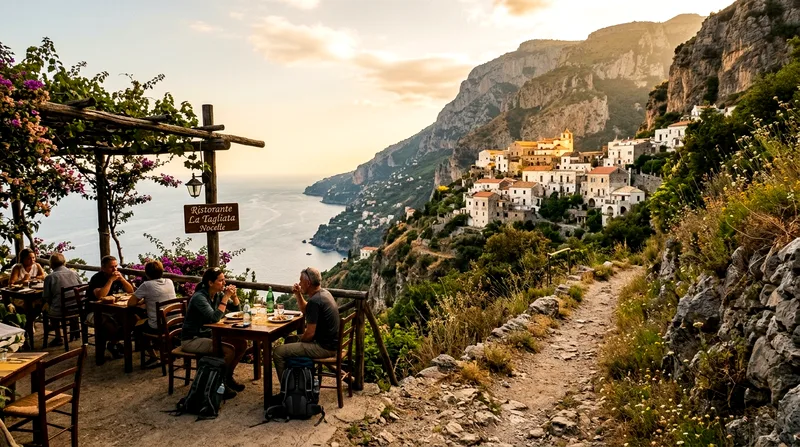
Bomerano and Nocelle both have small trattorias serving simple, reasonably priced lunches — expect pasta or panini in the €8-15 range, nothing fancy, but the views from Nocelle's terraces rival anything in Positano at a fraction of the price. Praiano, a short detour from the trail's midpoint, is a quieter alternative to Positano for an evening meal if you want to avoid the tourist markup closer to the water.
Related hikes and coastal attractions
If the Path of the Gods leaves you wanting more, the Valle delle Ferriere trail near Amalfi offers waterfalls and shade — a good contrast to the exposed ridge walk. Pair your trip with a ferry to Capri or Ischia the following day to rest your legs, or extend into Sorrento for easier, flatter walking. Comparing regions, this hike has more dramatic elevation and sea views than most Cinque Terre trails, but it demands more from your knees and requires more planning around bus schedules — there's no train line doing the heavy lifting here.
Frequently asked questions
How long does the Path of the Gods hike take?
Most hikers complete the Bomerano-to-Nocelle stretch in three to four hours at a steady pace, not including photo stops or the final descent into Positano via roughly 1,700 steps, which adds another 30-45 minutes. Budget five to six hours total if you're including bus travel on both ends.
Is the Path of the Gods suitable for beginners?
Yes, with caveats. It's rated moderate rather than difficult — no technical climbing — but the terrain is uneven and there's real exposure on narrow sections. A beginner with basic fitness and proper shoes will manage fine; someone with no hiking experience and sandals will struggle and risks injury on the loose rock sections.
Do I need a guide for the Path of the Gods?
No, the trail is clearly marked with CAI red-and-white signage and widely available offline maps make navigation straightforward. A guide isn't necessary for safety but adds convenience around transport and local context — worth it if you value ease over saving money, skip it if you're comfortable managing your own bus schedule.
How do I get to the trailhead?
Take a SITA bus from Amalfi, Positano, Praiano, or Sorrento to Agerola (Bomerano stop), buying your ticket beforehand at a tobacco shop or newsstand, not on board. Guided tours typically arrange private shuttle transport instead, which avoids the sometimes-crowded public bus and fixed, infrequent schedules.
What should I bring on the hike?
Proper hiking shoes or sturdy trail runners, at least one liter of water per person, sun protection (there's minimal shade), a few euros in cash for small trailside bars, and an offline trail map since cell signal is unreliable along the ridge. Trekking poles help on the steeper descents, especially for seniors.