Plan your Herculaneum day trip from the Amalfi Coast. Compare tickets, guided tours, travel options, and why it beats Pompeii for fewer crowds.
What is Herculaneum and why visit
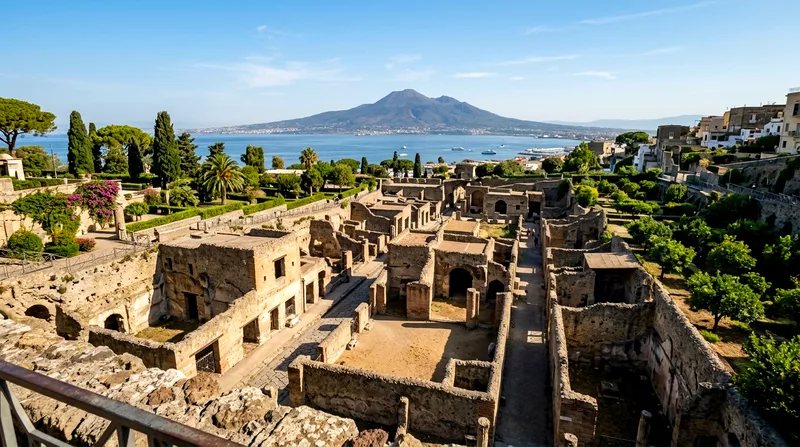
Herculaneum was a prosperous Roman seaside town near modern Naples, buried in AD 79 by the same eruption of Mount Vesuvius that destroyed Pompeii. A Herculaneum day trip from the Amalfi Coast gets you to a site that's smaller than Pompeii but arguably more revealing, because the volcanic material that covered it — a dense flow of mud and ash rather than falling pumice — sealed organic material instead of just crushing buildings flat.
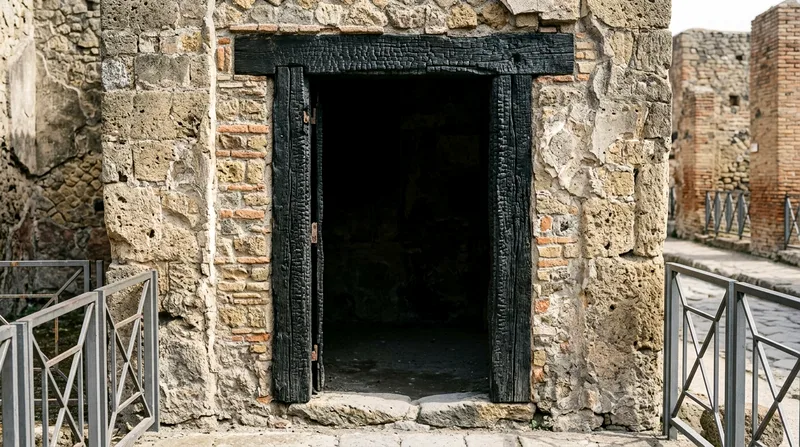
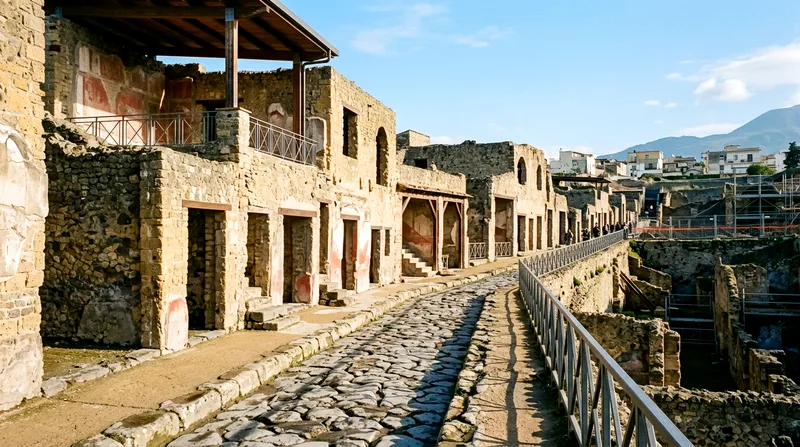
That distinction matters more than most visitors realize before they arrive. Wooden roof beams, carbonized furniture, doors on their hinges, and even upper-floor balconies survive here in a way they simply don't at Pompeii. The site covers roughly 4.5 hectares against Pompeii's 66, so you're not walking for hours between far-flung districts. You're looking closely at fewer, better-preserved buildings.
I'd argue Herculaneum is the better choice for anyone who's already done one big Roman ruin elsewhere — Rome's Forum, say — and wants depth rather than scale. If this is your only ancient site on the trip and you want the full "lost city" sweep, Pompeii's size and its Forum, amphitheater, and plaster body casts carry more emotional weight for first-timers. Both are UNESCO World Heritage Sites, and neither should be treated as a quick stop — give Herculaneum two to three hours minimum.
Preserved Roman town buried by Vesuvius
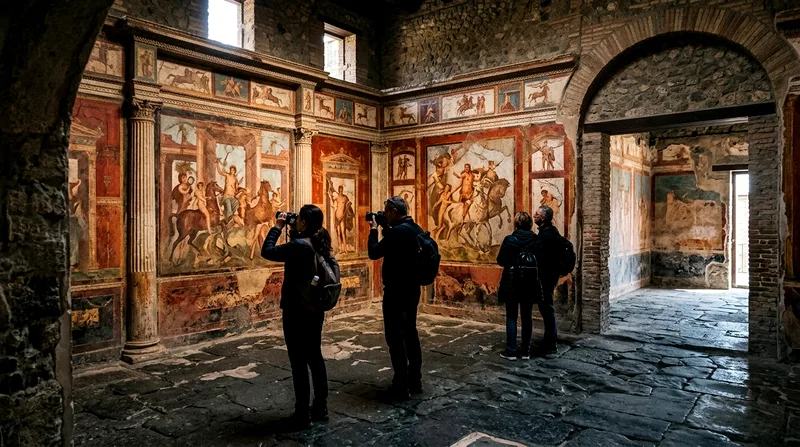
The eruption that destroyed Herculaneum sent superheated flows of mud, ash, and gas down the slopes of Vesuvius at speeds exceeding 100 km/h. Unlike Pompeii, which was blanketed in pumice and ash that collapsed roofs, Herculaneum was entombed in material that hardened into a protective shell up to 20 meters deep in places. That's why you'll see intact wooden beams in the House of the Wooden Partition and carbonized food remains in shops along the main streets — details that simply didn't survive at Pompeii. The site sits directly beneath the modern town of Ercolano, and you enter by walking down a ramp that puts you literally below street level of today's Naples suburbs.
Fewer crowds than Pompeii
Pompeii draws around 2.5 million visitors annually; Herculaneum sees a fraction of that number, generally cited at under a million. In practical terms, this means you can walk into most houses and shops without queuing or being jostled by tour groups, even in peak summer months. Early morning in July or August at Pompeii can feel like a theme park; the same hour at Herculaneum is genuinely quiet. If photography without strangers in every frame matters to you, that alone is worth the trade-off in site size.
Independent travel vs guided tours
The honest answer is that both work well for Herculaneum, and the right choice depends on how much you value flexibility versus context. Independent travel is cheaper and lets you linger exactly where you want. Guided tours cost more but solve the logistics puzzle and add historical narrative that the site's modest on-site signage doesn't fully provide.
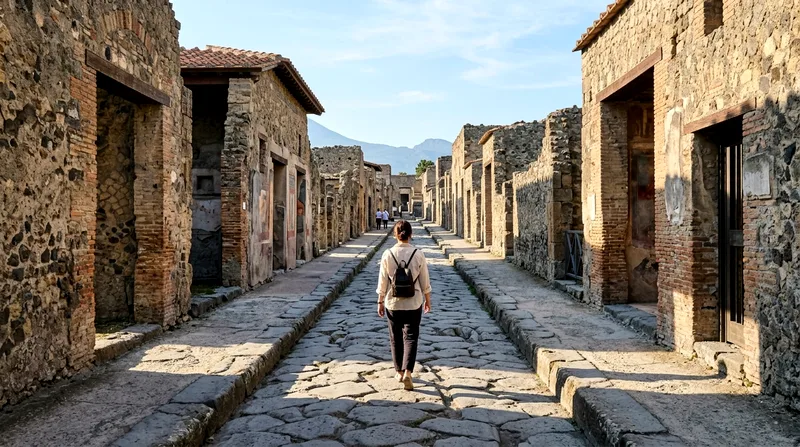
I'd lean toward independent travel if you're comfortable with Italian regional trains and want to set your own pace — Herculaneum's small footprint makes it one of the easier ancient sites to navigate solo, unlike Pompeii where a map genuinely helps. I'd lean toward a guided or driver-led day trip if you're traveling from Positano, Ravello, or farther along the coast, where the public transport connection adds real time and an extra layer of planning most travelers on a short stay would rather skip.
A guided tour saves time and transfers, while independent travel by train costs less but takes longer from most Amalfi Coast towns.
Herculaneum day trip from Amalfi Coast: travel options compared
| Option | Travel time from Positano | Typical cost level | Flexibility | Best for |
|---|---|---|---|---|
| Self-guided via Circumvesuviana | approx. 2-2.5 hours each way | Low | High | Budget travelers, solo travelers comfortable with trains |
| Guided minivan day tour | approx. 1.5-2 hours each way | Mid to high | Low | Families, seniors, first-time visitors wanting no transfers |
| Private driver day trip | approx. 1.5 hours each way | High | High | Couples, small groups wanting a custom stop at Vesuvius or Naples |
| Combined Herculaneum + Pompeii tour | Full day, 10-12 hours total | Mid to high | Low | Travelers with only one day for Roman ruins |
Travel times are approximate and vary by starting town, season, and traffic on the coastal road; confirm current schedules before booking.
Self-guided visit by public transport
From Sorrento, the Circumvesuviana railway runs directly to the Ercolano Scavi stop, a journey of around 20 minutes, with the entrance to Herculaneum a five-minute walk downhill from the station. From the Amalfi Coast itself — Amalfi, Positano, or Praiano — there's no direct train, so you'll first take a SITA bus or ferry to Sorrento (roughly 40-75 minutes depending on your starting point and season), then connect to the Circumvesuviana. Total door-to-door travel time from somewhere like Positano typically runs two to two-and-a-half hours each way. The Circumvesuviana is reliable but basic — expect no air conditioning guarantee, and watch your bags closely, since petty theft on this line is a known issue worth being alert to.
Organized tours from Amalfi Coast
A guided Herculaneum tour from the Amalfi Coast usually bundles round-trip transport, skip-the-line entry, and a licensed guide into one booking, which removes the train transfers entirely — most run as a private or small-group minivan excursion directly from coastal towns. These trips often pair Herculaneum with a Vesuvius crater hike or a Naples stop, turning it into a full-day itinerary rather than a half-day outing. Expect a long day: many depart by 7:30-8:00am and return by early evening given the distances involved. Compare current prices and itineraries before you book, since inclusions (lunch, Vesuvius entry, guide language) vary by operator.
Tickets and entry information
Herculaneum tickets are sold both at the gate and online through the official Italian ministry of culture ticketing system. A standard adult ticket is generally priced lower than Pompeii's, reflecting the smaller site, and EU citizens aged 18-25 typically get a reduced rate, while visitors under 18 enter free. Hours run roughly 8:30am to 7:30pm in summer and shorten to around 5:00pm in winter, with last entry 90 minutes before closing — always confirm current hours when booking, since they shift seasonally.
Ticket types and access options
There's a standalone Herculaneum ticket, and there's also a combined ticket covering Herculaneum, Pompeii, and several smaller Vesuvian sites like Oplontis and Stabiae, valid for a set number of days — useful if you're determined to see both major ruins on the same trip rather than choosing one. Audio guides are available for rent at the entrance, and a printed site map is included with every ticket. There's no dedicated app-based self-guided tour comparable to what some Pompeii apps offer, so if you want deep context without a human guide, download information beforehand or rent the audio guide on-site.
Booking in advance benefits
Booking online ahead of your visit adds a small reservation fee but guarantees entry on a specific date and lets you skip the ticket window entirely — genuinely useful during July and August when even Herculaneum's shorter queues can stretch during midday peaks. If your Amalfi Coast itinerary is tight and this is your one shot at the site, book ahead rather than risk arriving to find a school group has cleared out the ticket booth's short line into a half-hour wait.
Best time to visit Herculaneum
Shoulder season — April, May, late September, and October — is the sweet spot for a Herculaneum day trip from the Amalfi Coast. Temperatures sit comfortably in the high teens to mid-20s Celsius, the archaeological area has shade from surrounding trees in a few sections, and you avoid both the worst heat and the summer crowd peaks that hit Pompeii harder than Herculaneum but still thin out visitor comfort at both sites.
Seasonal considerations and crowds
Summer (June-August) brings the heaviest visitor numbers and the harshest midday sun, with little natural shade across the open excavation areas — arrive right at opening or in the last two hours before close to avoid both heat and the modest crowds that do build around midday tour-bus arrivals. Winter (November-March) is genuinely the quietest period, and Naples' mild Mediterranean winters rarely drop below 8-10°C, making it a viable off-season option many Amalfi Coast visitors overlook because the coast itself is quieter and some coastal hotels close for the season.
Weather and daylight hours
Daylight matters more than you'd think when stitching together train transfers and a site visit. In December, sunset comes before 4:45pm, which compresses a day trip considerably if you're relying on buses and trains from farther Amalfi Coast towns. In June and July, daylight past 8:30pm gives far more flexibility, letting you add a Naples dinner stop on the way back without rushing. Bring sun protection regardless of season — there's minimal covered seating inside the site itself.
Nearby attractions and add-ons
Herculaneum's compact size means most visitors finish in under three hours, leaving room to combine it with something else on the same day — which is exactly why so many Amalfi Coast day trips package it with a second stop rather than treating it as a stand-alone outing.
Pompeii and Mount Vesuvius
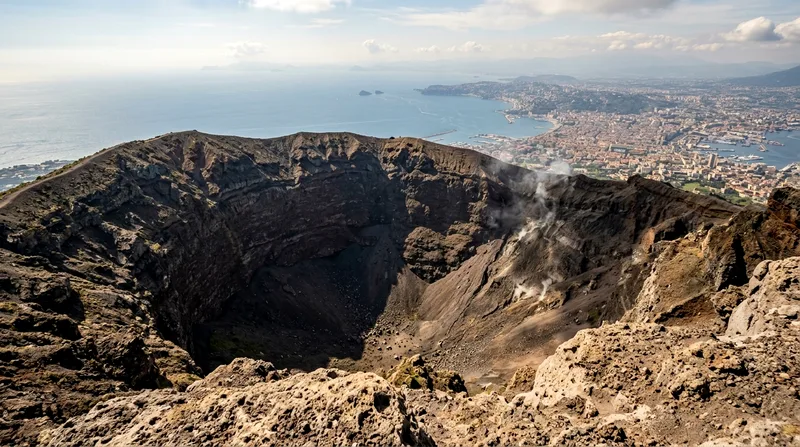
Pompeii sits about 15 minutes by Circumvesuviana from Ercolano, and pairing the two in one day is possible but ambitious — realistically you're looking at a 10-12 hour day once you factor in Amalfi Coast travel time on both ends. Mount Vesuvius itself is a better pairing for most travelers: the crater trail is reachable by shuttle bus from Ercolano or Pompeii train stations, takes about 1.5-2 hours round trip including the hike, and gives you the volcano's perspective looking down on the exact towns it destroyed. Entry to the Vesuvius National Park crater path runs a separate, modest fee from the archaeological sites.
Naples city center experiences
Naples itself is roughly 20 minutes by train from Ercolano, making it an easy final stop before heading back to the Amalfi Coast. The National Archaeological Museum of Naples holds many of the actual frescoes, mosaics, and bronzes excavated from both Herculaneum and Pompeii — arguably a more essential stop than either ruin if you want to see the finest artifacts in one place rather than scattered or stored off-site. Naples also gives you a real contrast to coastal towns like Sorrento or Positano: it's grittier, louder, and far less polished, which some travelers love and others find overwhelming after the calm of the coast.
Frequently asked questions
How long does a Herculaneum day trip take from the Amalfi Coast?
Budget a full day. Travel time alone from towns like Positano or Amalfi runs roughly 1.5-2.5 hours each way depending on whether you drive, take a guided tour, or use public transport via Sorrento. Add two to three hours at the site itself, and a realistic day trip runs 7-9 hours door to door.
Is Herculaneum better than Pompeii?
Neither is objectively "better" — they offer different experiences. Herculaneum has superior preservation of organic materials like wood and food remains, plus far fewer crowds, but it's a third the size of Pompeii and lacks the amphitheater and Forum scale that make Pompeii feel like a full ancient city.
Can you visit Herculaneum and Pompeii in one day?
Yes, since they're about 15 minutes apart by Circumvesuviana train, but it makes for a long day when you add Amalfi Coast travel time on both ends. Most travelers who want to see both comfortably either stay overnight near Naples or split them across two separate day trips.
What is the best way to get to Herculaneum from Amalfi?
There's no direct public transport link, so independent travelers take a SITA bus or ferry to Sorrento, then the Circumvesuviana train to Ercolano Scavi station, a short walk from the entrance. A guided tour or private driver avoids this transfer entirely and is faster overall, at a higher price.
Do you need a guide to visit Herculaneum?
No, a guide isn't required — the site is small enough to navigate with a map and rented audio guide. A guide adds historical context the on-site signage doesn't fully cover, which matters more if this is your only ancient Roman site on the trip.