Positano vs Amalfi Town compared on vibe, beaches, dining, transport, and activities — a practical guide to picking your base on the Amalfi Coast.
Quick Comparison: Positano vs Amalfi Town
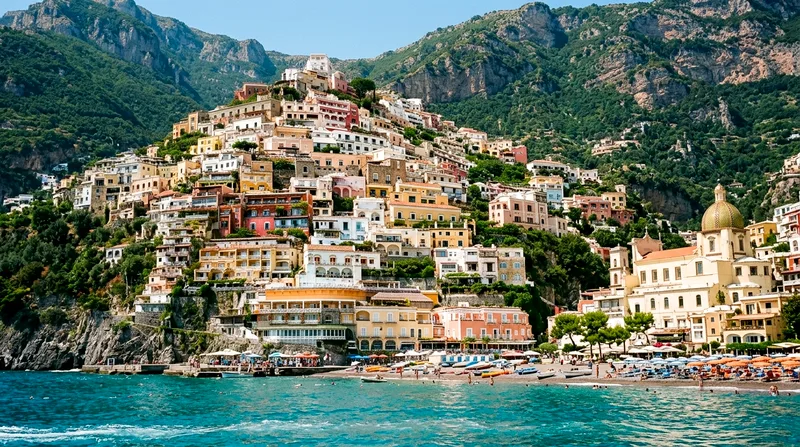
Positano vs Amalfi Town is the first decision most people face when planning an Amalfi Coast trip, and it's a harder call than guidebooks suggest. Both sit on the same stretch of coastline, both are reachable by SITA bus or ferry, and both get crowded between June and September. But they're built for different kinds of travelers. Positano is vertical, photogenic, and expensive — a town of pastel buildings stacked on a cliff with a famous pebble beach, Spiaggia Grande, at the bottom. Amalfi Town is flatter, older, and more functional, with a real piazza, a working cathedral, and better transport connections to Ravello, Salerno, and the rest of the coast.
If you want the view you've seen on postcards and don't mind paying for it, Positano delivers. If you want a base that's easier to walk around, has more budget dining options, and doesn't require booking restaurants weeks ahead, Amalfi Town is the more practical choice. Neither is objectively "better" — this is really about matching the town to your travel style, budget, and tolerance for stairs.
Positano offers the iconic view and higher prices, while Amalfi Town offers flatter walking and better onward transport.
Positano vs Amalfi Town: key differences at a glance
| Factor | Positano | Amalfi Town |
|---|---|---|
| Terrain | Steep, hundreds of steps | Mostly flat center, some hills |
| Beach | Spiaggia Grande, pebble, paid sections | Marina Grande, pebble, smaller |
| Avg. hotel cost (night) | High, often €250+ | Moderate, often €120-250 |
| Transport hub | Limited, mostly bus/ferry stop | Main SITA bus and ferry hub |
| Best for | Couples, romance, photos | Families, day-trippers, budget mix |
| Day trip ease | Harder, fewer direct links | Easier, direct to Ravello, Salerno, Capri |
| Crowds (summer) | Very high, narrow lanes | High, but more space to absorb it |
Typical figures; prices and ferry schedules vary by season, so check current rates before booking.
Vibe and Atmosphere
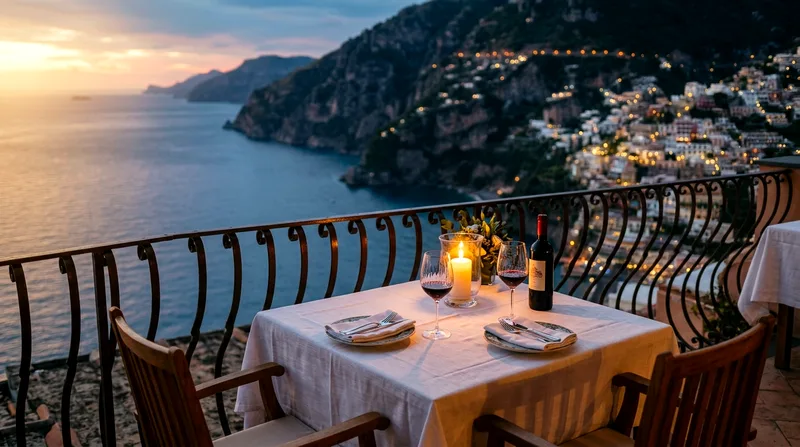
This is where the two towns diverge most sharply, and it's probably the first thing to weigh before anything else.
Positano's upscale, romantic feel
Positano built its reputation on looking good from a distance, and it mostly lives up to that. Buildings in ochre, pink, and white climb the hillside in tiers, boutiques sell linen and leather sandals at prices that assume you're on honeymoon, and restaurants with sea-view terraces book out days in advance in peak season. It's genuinely romantic — couples and honeymooners gravitate here for good reason. But the town is small and almost entirely vertical. There's one main pedestrian street, Via dei Mulini, and getting from your hotel to the beach can mean climbing or descending 200+ steps each way. I wouldn't recommend it for anyone who finds stairs tiring, and that includes some senior travelers who assume "charming Italian town" means a flat stroll. It doesn't.
Amalfi Town's historic, busy energy
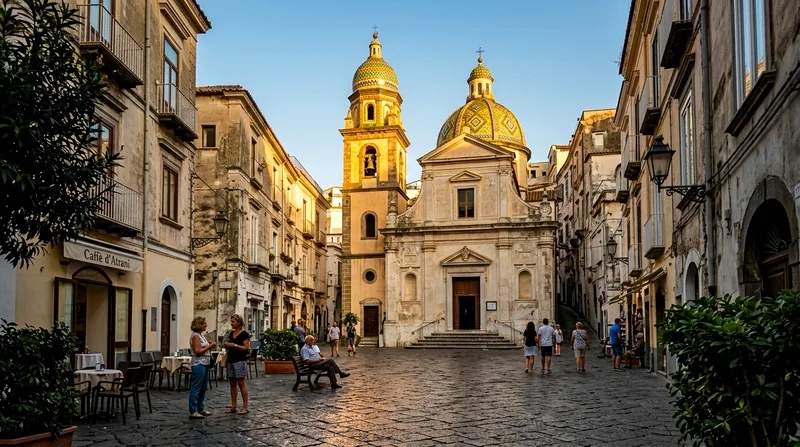
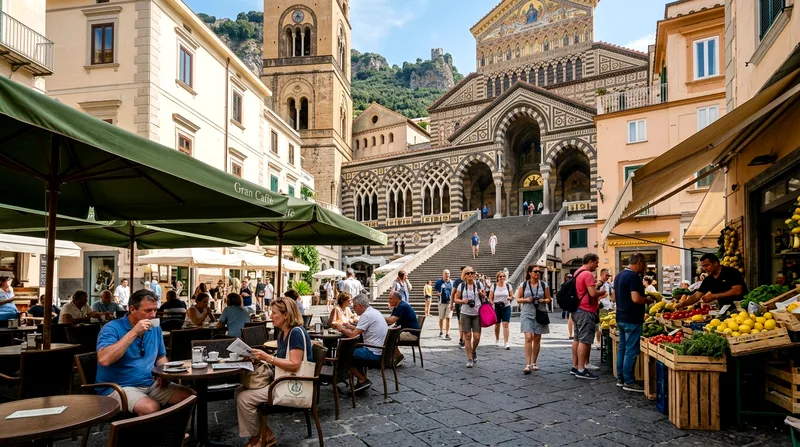
Amalfi Town feels less curated and more lived-in. It was a maritime republic power centuries before Positano became fashionable, and that history shows in the Duomo di Sant'Andrea, the cathedral that dominates the main piazza with its striped facade and long staircase entrance. The center is compact and largely flat, built around a paper-mill valley rather than a single cliff. You'll find souvenir shops alongside actual hardware stores and bakeries — it reads as a real town, not just a resort. Evenings here are more sociable than luxurious: gelato on the piazza, families out walking, less of the hushed fine-dining atmosphere Positano cultivates. It's a trade worth considering if you want atmosphere without the price tag attached.
Beaches and Water Access
Neither town has the broad sandy beaches travelers might expect from the Mediterranean — this coastline is mostly pebble and cliff, which surprises first-time visitors more than it should.
Spiaggia Grande and nearby coves
Spiaggia Grande is Positano's main beach, a crescent of gray pebbles split between free public sections and paid beach clubs charging roughly €25-40 per person for a sunbed and umbrella for the day. It's convenient — you can walk straight into town — but it gets packed by mid-morning in July and August. Smaller, quieter coves like Fornillo are a 15-minute walk along a coastal path and worth the effort if you want fewer people. Water here is deep close to shore, good for swimming but less ideal for small children who need shallow wading areas.
Atrani and boat-accessible shores
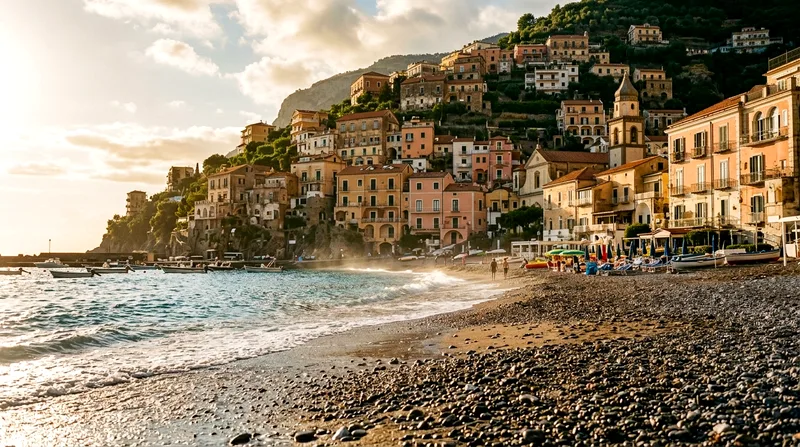
Amalfi Town's own beach, Marina Grande, is smaller and less scenic than Positano's, but a five-minute walk over a headland brings you to Atrani — a tiny, often-overlooked village with its own beach and noticeably fewer tourists. Many of the coast's best swimming spots, around both towns, are only reachable by boat anyway: coves near Conca dei Marini or the Emerald Grotto require a short ride rather than a walk. If swimming quality matters more than beach-town atmosphere, renting a small boat for a few hours (common in both towns, typically €80-150 for a half-day without skipper, more with one) often beats fighting for beach-club space.
Dining and Local Food Scene
Food is one of the more honest ways to compare these towns, because menus reveal who they're built for.
Positano's fine dining and seafood
Positano's restaurant scene leans toward seafood tasting menus, sea-view terraces, and prices to match — a simple dinner for two with wine can easily run €90-150 at mid-range spots, more at anything with a view of Spiaggia Grande. The food is generally good, sometimes excellent, but you're paying for setting as much as cooking. Reservations matter here; walking in without one during peak season at a popular terrace restaurant often means a long wait or no table at all.
Amalfi Town's casual trattorias
Amalfi Town has its share of upscale spots too, but it also has family-run trattorias tucked into side streets off the main piazza where a plate of scialatielli ai frutti di mare runs €14-18 and nobody raises an eyebrow if you show up in beach clothes. Lemon everything is the local specialty — delizia al limone, limoncello, lemon granita — since the surrounding hills grow the Sfusato Amalfitano lemon used across the coast. For travelers on a tighter budget, or families with children who don't need a formal three-course dinner, Amalfi Town is simply easier to eat well in without planning ahead.
Accessibility and Getting Around
This is the practical heart of the Positano vs Amalfi Town decision, and it's where Amalfi Town pulls ahead for most trip styles.
Transport links and parking
Amalfi Town functions as the transport hub of the coast. SITA buses from Sorrento and Salerno converge here, ferries run regularly to Positano, Capri, Salerno, and occasionally Naples, and it's the easiest jump-off point for a half-day trip up to Ravello (about 25 minutes by bus or a pricier taxi). Positano has bus stops and a ferry dock too, but connections are less central — buses from Sorrento can take 45-75 minutes depending on traffic, which on this single coastal road is often bad in summer. Parking in both towns is limited and expensive; if you're renting a car, expect to pay for a hotel garage or public lot rather than street parking, often €20-35 per day.
Walking difficulty and terrain
Positano's terrain is the real dealbreaker for some travelers. Nearly everything involves stairs — hotels advertise "a few steps from the beach" when they mean 150. Amalfi Town's center, by contrast, is flat enough for a wheelchair or a stroller to manage comfortably, with hills only once you head toward the hiking trails above town. For senior travelers or anyone traveling with young kids and a stroller, this difference alone can decide the whole trip.
Activities and Bookable Experiences
Both towns work as bases for exploring the wider Amalfi Coast, but they lend themselves to slightly different itineraries.
Boat tours and water sports
Positano has more boat rental outfits and day-tour operators simply because demand is higher — half-day and full-day boat tours along the coast to Capri or the Li Galli islands are easy to book right from the harbor. Amalfi Town offers the same style of tours with slightly less selection, but its ferry connections mean you can also do Capri or Salerno as a scheduled ferry trip rather than a private charter, which is cheaper if you don't need a private boat. Compare current boat tours and prices before you book, since rates shift with season and fuel costs.
Hiking, cultural sites, and day trips
The Path of the Gods, the coast's best-known hike, is actually more convenient from Positano's side (via Nocelle) or from Agerola above, but Amalfi Town is the better base for reaching Ravello's gardens (Villa Rufolo, Villa Cimbrone) and for day trips inland or to Pompeii via Salerno's train connections. If your itinerary includes Pompeii, Naples, or a stop in Ischia, Amalfi Town's transport links make logistics noticeably simpler than staging everything from Positano.
Who Should Choose Which?
Choose Positano if you're a couple celebrating something, you want the view everyone recognizes, and you're fine paying a premium and climbing stairs for it. It also suits solo travelers and world travelers chasing the classic image of the Amalfi Coast and not overly budget-conscious.
Choose Amalfi Town if you're traveling with family, managing a budget, prioritizing easy transport to Ravello, Salerno, or Capri, or simply don't want to manage 200 steps with luggage. It's also the better pick for senior travelers and anyone building a multi-stop Amalfi Coast itinerary that includes Sorrento, Pompeii, or Naples. Honestly, a lot of travelers do best splitting a week between the two — stay in Amalfi Town for convenience and take a day or overnight trip to Positano for the view, rather than trying to force one town to do everything.
Frequently asked questions
Is Positano or Amalfi Town better for families?
Amalfi Town is generally easier with children. The center is flat, there are more casual and affordable restaurants, and the beach at Marina Grande is a short walk from most hotels. Positano's steep stairs make simple tasks like getting from a hotel to dinner harder with strollers or tired toddlers.
Which destination is cheaper to visit?
Amalfi Town tends to be cheaper overall. Hotel rates average €120-250 a night versus often €250 and up in Positano, and trattoria meals in Amalfi Town commonly run €14-20 per main compared with €25-35 in Positano's seafront restaurants. Neither town is truly budget, but Amalfi Town has more mid-range options.
Can you visit both Positano and Amalfi Town in one day?
Yes, by ferry it's roughly 20-25 minutes between them in good weather, and SITA buses connect them along the coastal road in about 40-50 minutes depending on traffic. A single day covering both towns is feasible but rushed — most visitors prefer a half-day in each rather than trying to see everything.
Which has better public transport access?
Amalfi Town, clearly. It's the main SITA bus interchange for the coast and has more frequent ferry connections to Salerno, Capri, and Positano itself. Positano has bus stops and a ferry dock but functions more as a destination than a hub.
Is Positano or Amalfi Town more crowded?
Positano feels more crowded because its single pedestrian street and stacked layout concentrate foot traffic into a tight space. Amalfi Town gets similarly high visitor numbers in peak season (June-September) but its wider piazza and flatter layout absorb crowds more comfortably.