Looking for atrani amalfi coast things to do? Explore the beach, village, trails and trattorias of this quiet town, minutes from Amalfi.
Why Visit Atrani Over Amalfi Town
Atrani sits so close to Amalfi Town that a tunnel through the cliff connects the two in under five minutes on foot, yet the atmosphere couldn't be more different. Amalfi's main square fills with tour groups from April through October; Atrani's piazza rarely does. That proximity is the whole case for staying here — you get Amalfi's ferries, buses, and restaurants within walking distance, minus the crowds and minus a chunk of the price tag.
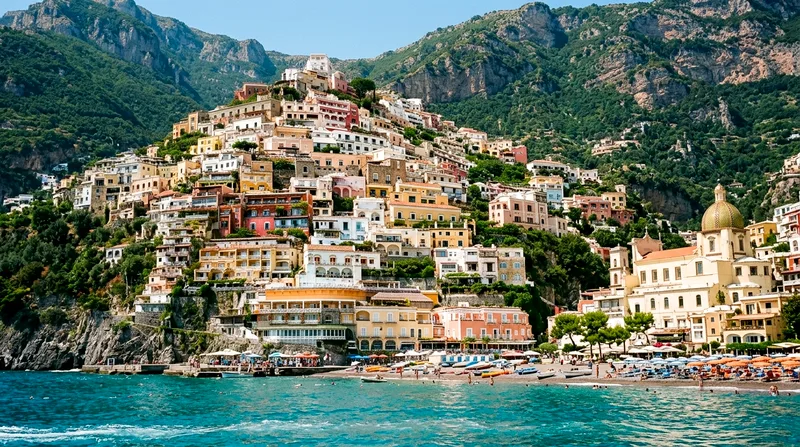
Atrani also happens to be Italy's smallest municipality by area, packed into a ravine between two headlands on the Tyrrhenian Sea. There's no room for sprawl, which is exactly the point. Everything — the church, the bakery, the handful of guesthouses — sits within a two-minute walk of the beach. If you've done Positano or Capri on a previous trip and found them overwhelming in August, Atrani is the corrective.
It's not perfect. There's genuinely little to do after dinner, and the beach is small enough that it can feel crowded with twenty people on it. If you want evening energy or a long stretch of sand, stay in Amalfi or Maiori instead.
Atrani offers a cheaper, quieter base close to Amalfi, but trades away beach space and nightlife that larger towns provide.
Atrani vs other Amalfi Coast villages: things to do, cost, and crowds
| Village | Typical Crowd Level | Beach Size | Accommodation Cost | Best For |
|---|---|---|---|---|
| Atrani | Low | Small | Lower | Quiet base, budget travel |
| Amalfi Town | High | Small-medium | Mid-high | Ferries, shops, history |
| Positano | Very high | Medium | High | Views, photos, nightlife |
| Ravello | Moderate | None (hilltop) | Mid-high | Gardens, concerts, calm |
| Praiano | Low-moderate | Small | Lower-mid | Diving, sunsets, value |
Crowd levels and costs are relative and seasonal; always check current rates and ferry schedules before booking.
Smaller crowds and authentic atmosphere
Most visitors to the Amalfi Coast never make it to Atrani because it doesn't appear on the main coastal road — SS163 passes above it, and you reach the village through a tunnel or down a long flight of steps. That geographic accident has kept it largely residential. Laundry hangs across alleyways, older residents still gather in the piazza in the evening, and shopkeepers speak Italian first. Compare that to Positano's main street in July, where you're shoulder to shoulder with other travelers past 10pm — Atrani empties out by 9.
Budget-friendly accommodation and dining
Room rates in Atrani typically run noticeably lower than equivalent rooms in Amalfi or Positano, partly because there's no sea view premium attached to most properties and partly because the village has fewer four- and five-star hotels competing for the "luxury Amalfi Coast" market. A simple seafood lunch with wine here generally costs less than the same meal eaten on a terrace in Positano, where you're also paying for the view. Budget travelers doing the whole Campania region on a tight schedule — Naples, Pompeii, Salerno — often use Atrani as the cheaper sleep base and ride the SITA bus or ferry into the pricier towns for sightseeing.
Atrani Beach and Waterfront
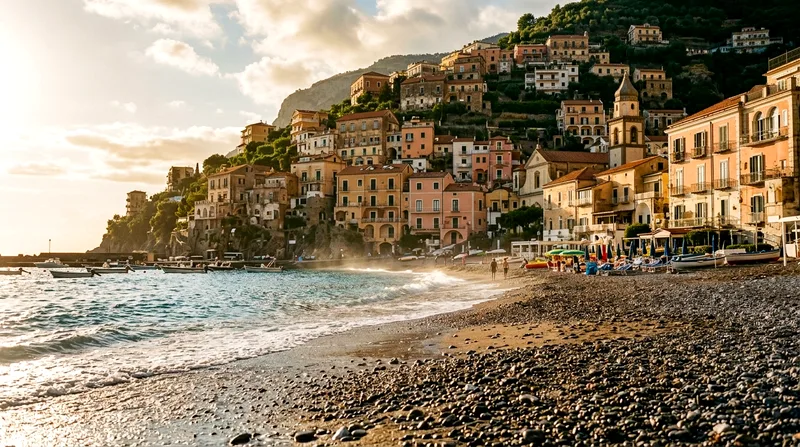
Atrani beach is a pebble-and-sand stretch wedged between two cliffs, roughly the length of a football pitch, facing directly onto the Mediterranean Sea. It's not going to compete with the coastline at Maiori or Cetara, both of which have considerably more room, but it's the only real public beach in the immediate Amalfi area that doesn't require paying for a lido chair just to sit down. Free beach space exists, though it fills fast by mid-morning in July and August.
The water here is clean and swims deep quickly, which locals like and parents of small children should know in advance — this isn't a gentle, shallow wading beach. There are a couple of beach bar setups with rented sunbeds if you want shade and a table, priced similarly to other small-town lidos on the coast, generally cheaper than anything in Amalfi or Positano itself.
Main beach features and swimming
The beach curves around the harbor wall, giving you a view back toward the village's stacked buildings — the photo most people associate with Atrani. Mornings before 10am are calmest; by early afternoon, boats, swimmers, and sunbathers share a fairly tight space. There are no lifeguards posted in the way you'd expect at a larger resort beach, so if you're traveling with children or are a nervous swimmer, stay close to shore and check conditions before heading out, especially when there's any wind off the Tyrrhenian.
Boat access and water activities
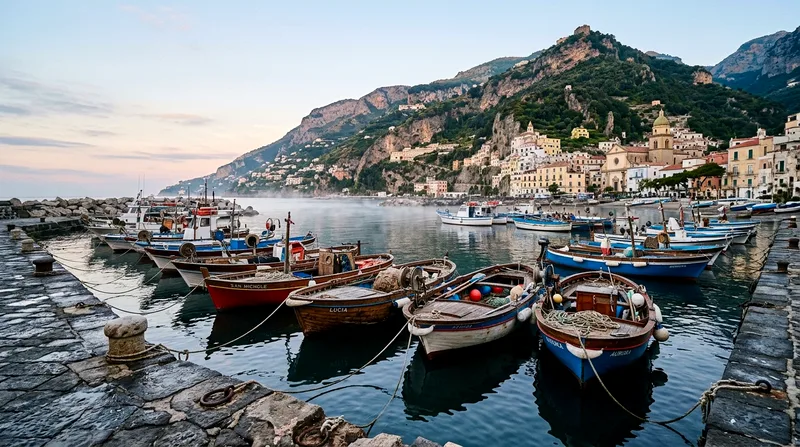
Small boats can be rented informally near the harbor for coastal exploring, and this is genuinely one of the better reasons to base yourself in Atrani rather than Amalfi — you avoid the ferry terminal crowds and can reach quieter coves toward Conca dei Marini or the Amalfi grottoes directly from the beach. If you'd rather book a guided boat tour that covers Positano, Capri, or the Emerald Grotto in one trip, compare current boat tours and prices before you book, since schedules shift by season and departure points vary along this stretch of coast.
Exploring the Village and Architecture
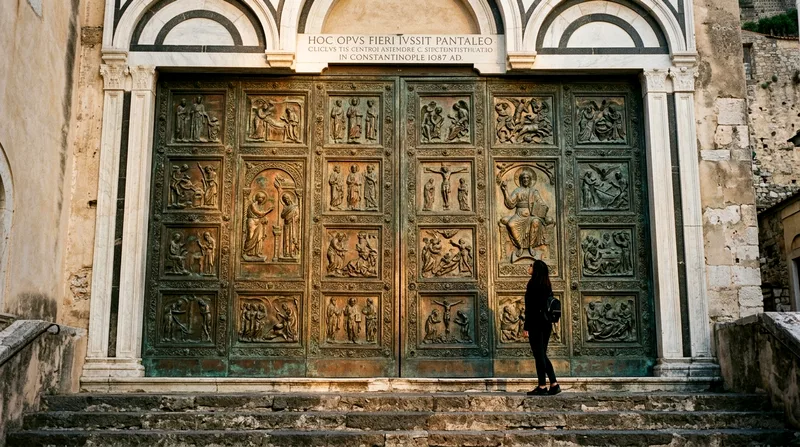
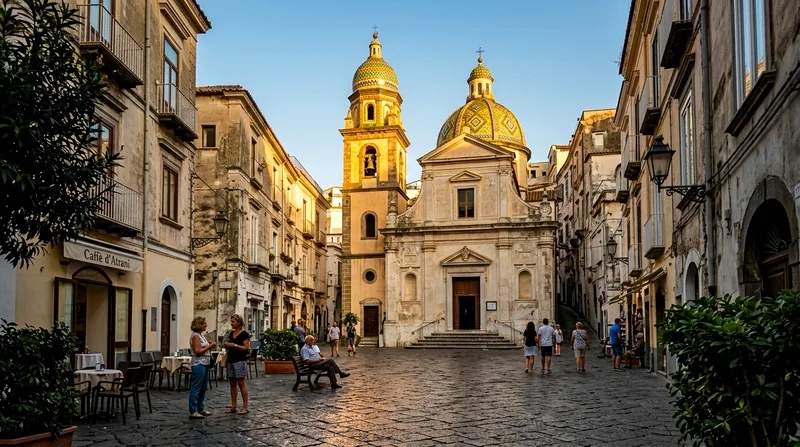
Atrani's center is the Piazza Umberto I, a small square just steps from the beach where the Church of San Salvatore de Birecto — often called San Salvatore d'Atrani — stands with its majolica-tiled dome, a style repeated across Campania's coastal churches but rarely seen this close to the water without a tour group blocking the view. The church has Byzantine-influenced bronze doors, cast in Constantinople, that once opened for the investiture ceremonies of the Doges of the old Amalfi Republic, when Atrani served as the civic heart of the maritime state.
Behind the piazza, the village climbs in tight staircases and covered passageways typical of Mediterranean architecture built for defense and shade rather than cars — there are essentially no roads inside the old center, which keeps it quiet but also means luggage with wheels is a poor choice for getting to your hotel.
Historic piazza and church
Spend twenty minutes in San Salvatore de Birecto even if church architecture isn't usually your thing — the connection to Amalfi's medieval maritime power is more tangible here than in Amalfi Town itself, where that history gets diluted by souvenir shops. The piazza doubles as a cafe terrace and, on some summer evenings, hosts small local events or markets. Don't expect English signage explaining the history in detail; this isn't set up as a museum experience.
Narrow streets and local shops
Wander the vaulted alleys above the piazza and you'll find a bakery, a couple of small grocers, and family-run shops selling ceramics and limoncello at prices generally lower than the tourist-focused shops in Amalfi or Positano's main strip. There's no real shopping district — if you came for boutique browsing, Sorrento or Positano will serve you better. Atrani's appeal is the architecture itself: stacked white and ochre houses, exterior staircases, and the kind of unplanned layout that happens when a village grows inside a ravine over a thousand years.
Hiking and Outdoor Activities
Atrani works as a trailhead as much as a beach town. The hills behind it connect to several coastal hiking trails that run above the Amalfi Coast's main road, giving you sea views without the traffic noise. This is one of the more underused advantages of staying here — hikers based in Amalfi or Positano still have to travel to reach the same trailheads that start almost directly above Atrani's rooftops.
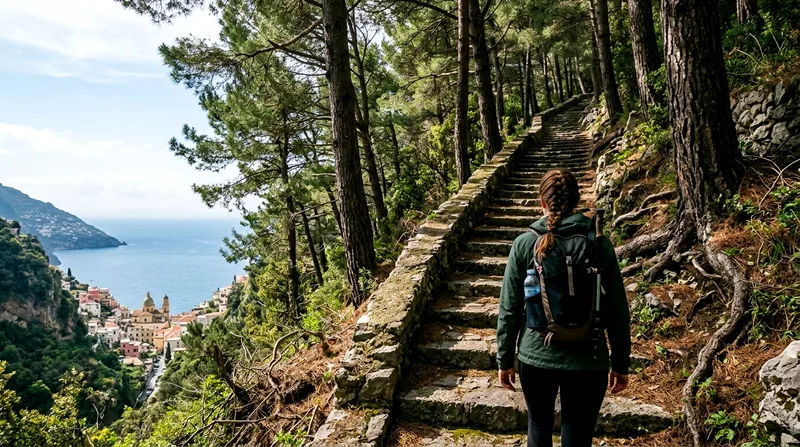
Trails here range from easy valley walks to steep stone staircases that gain several hundred meters quickly, so bring proper shoes — sandals are a genuinely bad idea on the wet, worn stone steps common across this region.
Coastal trail connections
A path climbs from Atrani toward Ravello, roughly 45 minutes to an hour of steady uphill walking on stepped paths, arriving in Ravello's quieter upper streets rather than its crowded main piazza. It's a far more interesting approach than the SITA bus switchbacks, and it means you can see both villages in a single day without backtracking to Amalfi first.
Mountain and valley walks
Inland from Atrani, the Valle delle Ferriere nature reserve area connects via trails toward Amalfi and Pontone, passing old paper mills and waterfalls in a landscape that feels nothing like the coastline below. It's cooler, shaded, and far less busy than the famous Path of the Gods above Positano — a reasonable alternative if that trail's crowds or its logistics (you need transport to the Bomerano starting point) put you off.
Local Food and Dining
Food is one of the clearest reasons to eat in Atrani rather than walk back to Amalfi for dinner. Menus lean on the same Campania staples — lemons, anchovies, fresh pasta — but portions and prices feel like a local trattoria rather than a tourist-town restaurant marking up for the view.
Traditional restaurants and trattorias
Atrani has a handful of family-run restaurants clustered around the piazza and beachfront, most seating outdoors in good weather. They're generally simpler than Amalfi's waterfront restaurants — fewer tasting menus, more daily specials written on a chalkboard. Book ahead for a table right on the piazza on summer weekends; the village is small enough that even modest demand fills the handful of good spots quickly.
Fresh seafood and local specialties
Look for scialatielli ai frutti di mare, a thick hand-cut pasta with mixed shellfish that's a Campania regional specialty, along with grilled anchovies and the lemon-heavy dishes the whole coast is known for, using fruit from terraced groves rather than imported produce. Prices for a full seafood dinner with wine tend to run lower here than at comparable restaurants in Positano or on Capri, where rent and reputation both push menus upward.
Getting Around and Nearby Attractions
Atrani has no train station — the nearest rail connections run through Salerno, about 40 minutes away by road, which is also where most ferries and many coastal buses originate. From Salerno, travelers typically continue by SITA bus or ferry rather than driving, since parking along this coast is scarce and expensive everywhere, including in Atrani.
Transport links to Amalfi and Ravello
The SITA bus service that runs along the full Amalfi Coast stops close to Atrani, and the walk into Amalfi Town through the cliffside tunnel takes under ten minutes on foot — genuinely faster than waiting for a bus for that short a hop. Ravello sits roughly 20 minutes away by bus on winding mountain roads, or close to an hour on foot via the hiking path mentioned earlier. Buy bus tickets before boarding at a tobacconist or bar; drivers generally won't sell them, and fines for riding ticketless are enforced.
Day trip opportunities
Base yourself in Atrani and you're within a single day's reach of Amalfi, Ravello, Positano, and — by ferry — Capri, all without needing a car. Ferries from Amalfi's dock reach Positano in around 25-30 minutes and Capri in roughly an hour and a half depending on route and season, making Atrani a workable, cheaper alternative base for the same itinerary most visitors build around Sorrento or Positano. Pompeii and Naples are both feasible day trips too, though they require the bus or train connection through Salerno or Sorrento rather than a direct link.
Frequently asked questions
Is Atrani worth visiting?
Yes, especially as a base or half-day stop rather than a standalone destination. Its small beach, church, and piazza can be seen in two to three hours, but staying overnight lets you experience the coast without Amalfi's or Positano's crowds while keeping easy access to both.
What is the best time to visit Atrani?
Late May, June, and September offer warm swimming weather with noticeably fewer visitors than July and August, when the small beach fills quickly. April and October suit hikers more than swimmers, with cooler sea temperatures but comfortable trail conditions on the paths toward Ravello and the Valle delle Ferriere.
How do you get to Atrani from Amalfi?
Walk through the pedestrian tunnel cut into the cliff between the two towns — it takes under ten minutes and is the fastest option. The SITA bus also stops near Atrani on its regular coastal route, though for this specific short distance walking is usually quicker than waiting for the bus.
Where should you stay in Atrani?
Look for small guesthouses or B&Bs near the piazza or just above the beach; most Atrani accommodation is family-run rather than branded hotel chains. Rooms with sea views cost more, but even basic double rooms typically run cheaper than comparable options in Amalfi or Positano. Book well ahead for July and August, when the limited room count sells out fast.
What can you do on a rainy day in Atrani?
Visit the Church of San Salvatore de Birecto, browse the small shops in the vaulted alleys, and plan a longer lunch at one of the piazza trattorias. Rainy days are also a good time to take the bus into Amalfi or Ravello, where there's more indoor sightseeing, including Ravello's Villa Rufolo and its covered garden terraces.