Planning amalfi town tours and tickets? Get the facts on cathedral entry, boat trips, timing, and whether to go independent or guided.
What to See and Do in Amalfi Town
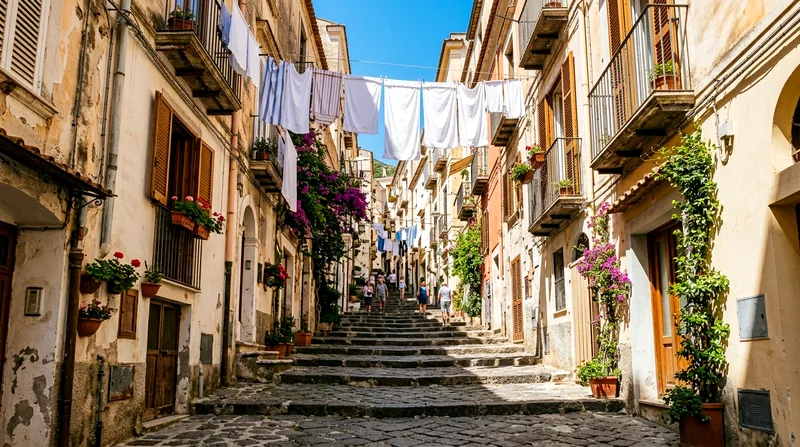
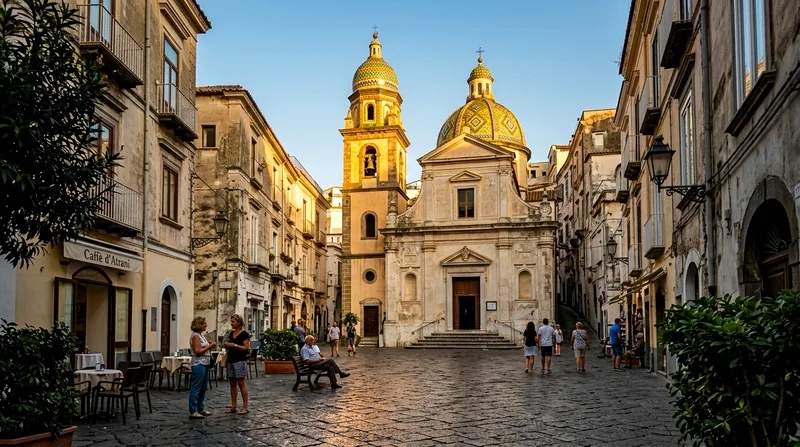
Amalfi Town sits at the mouth of a steep valley, which means almost everything worth seeing is within a 10-minute walk of the main square, Piazza Duomo. That compactness is the town's biggest advantage over Positano or Ravello, where getting between sights involves more stairs or a car. You can realistically cover the cathedral, the harbour, the old paper mill district, and a wander through the Arsenale in under three hours.
The town's layout rewards a slow pace more than a checklist. Past the cathedral steps, Via Lorenzo d'Amalfi and the narrower lanes climbing toward Valle dei Mulini are where you find working bakeries, small limoncello producers, and the kind of unmarked alley views that don't show up in photos taken from the piazza. I'd skip the souvenir shops lining the main drag closest to the harbour — prices run 20-30% higher than the same ceramics or leather goods sold two streets back.
Amalfi Cathedral and its Treasures
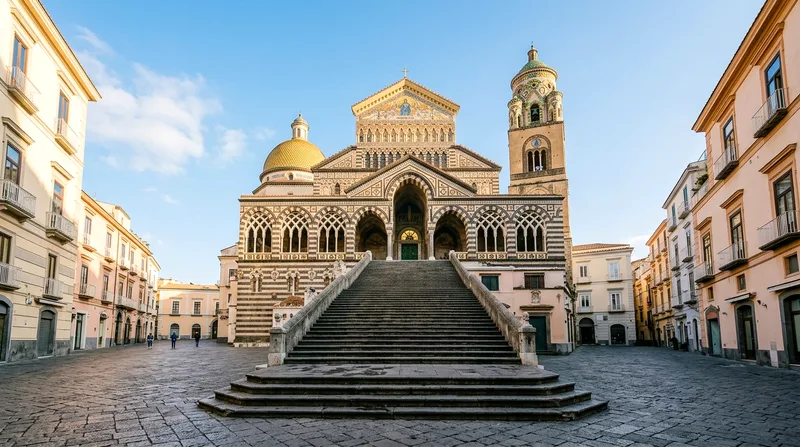
The Cathedral of Sant'Andrea dominates Piazza Duomo with its striped Arab-Norman facade and bronze doors cast in Constantinople around 1066 — among the oldest bronze doors in Italy. Entry includes the Cloister of Paradise, a 13th-century Arab-Norman courtyard with interlaced arches, the Basilica of the Crucifix, and the crypt holding relics attributed to Saint Andrew the Apostle. Budget 30-45 minutes inside if you read the information panels; faster if you're just passing through. The complex is more substantial than Positano's Santa Maria Assunta, which has no comparable cloister or museum.
Paper Museum and Local Heritage
The Amalfi Paper Museum, housed in a 13th-century paper mill in Valle dei Mulini, a 15-minute walk from the piazza, demonstrates the cotton-rag papermaking process Amalfi was known for from medieval times through the 1800s. Visits run about 45 minutes and typically include a working demonstration on a restored wooden press. It's a quieter stop than the cathedral and usually has no queue, which makes it a good midday option when the piazza gets crowded. Families with kids aged 7 and up tend to enjoy the hands-on demonstration more than the cathedral's quieter religious art.
How to Visit: Independent vs Guided Tours
Most visitors don't need a guide in Amalfi Town itself — the sights are few, well-signed, and close together. Where guided options earn their cost is context: a local guide can explain the cathedral's layered construction history (Romanesque base, Baroque interior additions, 19th-century facade restoration) in ways the on-site signage doesn't, and can route you through the old town avoiding the worst midday crowds.
Independent visits suit flexible schedules and lower costs, while guided tours add historical context and logistics handling for multi-town days.
Amalfi town tours and tickets: independent visit vs guided options compared
| Option | Typical Duration | Cost Level | Best For |
|---|---|---|---|
| Self-guided cathedral + town walk | 2-3 hours | Low (ticket only, €3-5) | Flexible travelers, repeat visitors, budget-focused trips |
| Guided Amalfi walking tour | 1.5-2.5 hours | Moderate | First-time visitors wanting history and context |
| Coastal boat excursion from harbour | 2-4 hours | Moderate to high | Swimmers, couples, families wanting cove stops |
| Full-day coast tour (Amalfi + Positano/Ravello) | 7-9 hours | Higher | World travelers short on time, no rental car |
| Scheduled ferry to Positano or Salerno | 20-50 minutes | Low | Solo travelers, day-trip connections |
Typical figures based on standard seasonal operation; confirm current prices and schedules before booking.
Self-Guided Exploration Benefits
Going independently costs less and gives you control over pace — useful if you're also trying to fit in a swim, lunch, or a boat trip the same day. Buy cathedral entry at the ticket office beside the Cloister of Paradise entrance or, during peak summer weeks (July-August), online in advance to skip a queue that can run 20-30 minutes by midday. There's no need to pre-book outside summer. The trade-off: you'll miss historical detail a guide provides, and Amalfi's layered Byzantine-Norman-Baroque history isn't always intuitive from plaques alone.
Organized Tour Options
Amalfi town guided tours generally combine the cathedral with a walking route through the historic centre and sometimes the Paper Museum, running 1.5-2.5 hours with a local guide. Some operators bundle Amalfi into a full Amalfi Coast day trip from Sorrento or Salerno that also stops in Positano or Ravello — convenient if you don't want to manage ferry or bus logistics yourself, though you'll have less time in each town. If you're short on time and want the full story behind the cathedral without research, this is worth the cost; if you're staying multiple nights on the coast, self-guided is more flexible. Compare current prices and group sizes before booking, since formats and inclusions vary by operator.
Cathedral Tickets and Entry Information
Amalfi Cathedral tickets cover a single combined entry to the cloister, basilica, crypt, and cathedral interior — there isn't a way to buy access to just one section. The ticket office is a separate kiosk beside the Cloister of Paradise, not inside the cathedral itself, which confuses some first-time visitors who queue at the main church doors expecting to pay there.
Ticket Types and Access
Standard adult entry runs in the range of €3-5, with reduced rates for children and students and free entry for young children — check current prices when booking since rates are adjusted periodically. Tickets are typically valid for same-day entry only, with no re-entry once you exit the complex. Opening hours shift seasonally, generally starting around 9am-10am and closing by early evening in summer, with shorter winter hours and a midday closure in some months — confirm hours for your travel dates rather than relying on old schedules.
What's Included in Entry
Entry includes the Cloister of Paradise, the Basilica of the Crucifix (which houses the diocesan museum's religious art and vestments), the crypt with the relics of Saint Andrew, and the main cathedral nave. Audio guides aren't consistently available, so if you want detailed interpretation, pair the visit with a guided walking tour or read up beforehand — the posted information panels cover basics but skip most construction history. Wheelchair access is limited; the cloister and crypt both involve steps with no ramp alternative, which is worth knowing if mobility is a concern for your group.
Boat Tours and Harbour Departures
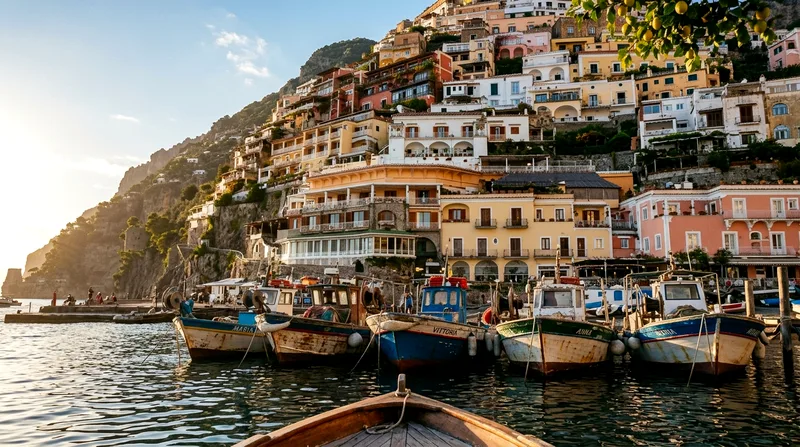
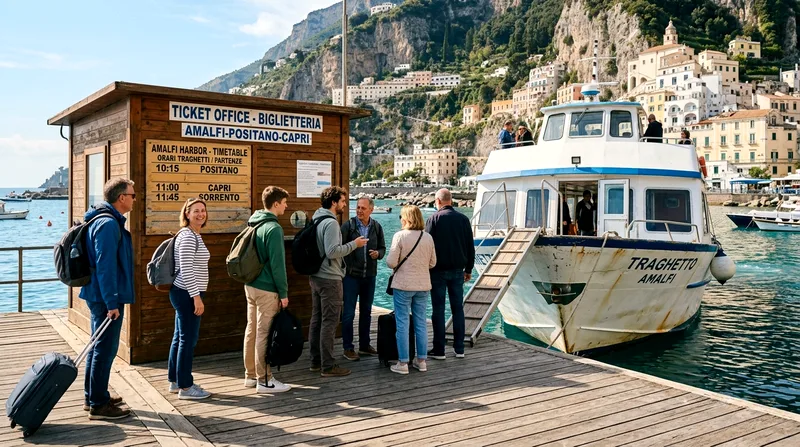
Amalfi Harbour is the coast's most useful transport hub after Sorrento's marina — ferries and boat tours from here reach Positano, Capri, Salerno, and smaller stops like Praiano and Atrani faster than the coastal road ever will, especially in summer traffic.
Coastal Boat Excursions
Amalfi harbour boat trips range from short 1-hour coastal cruises past the Grotta dello Smeraldo (Emerald Grotto) to half-day trips covering Positano and Capri together. Small-group or shared boat tours typically run 2-4 hours and include swim stops in coves inaccessible by road — a genuine advantage over Positano's more crowded beach-based swim spots. Private charters cost considerably more but let you set the route and timing yourself. Whichever you choose, check cancellation policies; sea conditions can ground departures with little notice, particularly in spring and autumn.
Ferry and Water Taxi Services
Scheduled ferries connect Amalfi to Salerno (about 35-50 minutes), Positano (around 20-25 minutes), and Capri (roughly 1-1.5 hours) during the operating season, generally Easter through October — most routes pause or reduce significantly in winter. Ferries are usually faster and less nauseating than the SITA bus along the coastal road, and they avoid the parking problem entirely, since Amalfi's limited lots fill early and cost more per hour than most visitors expect. Water taxis exist for short hops but cost noticeably more than scheduled ferries for the same distance.
Best Time to Visit Amalfi Town
Amalfi Town is walkable and low-key enough that it doesn't have a genuinely bad season, unlike Positano, which feels half-closed outside summer. That said, timing changes what the visit feels like considerably.
Seasonal Considerations
May, June, and September offer the best balance — warm enough to swim, ferries running full schedules, and noticeably fewer people than July-August. July and August bring the busiest piazza crowds and the highest accommodation prices on the whole coast; if you're set on summer, arrive at the cathedral before 9:30am. Winter (November-March) sees many restaurants and some ferry routes close, but the town itself stays open and the light on the cliffs is worth the trade-off if you don't need to swim.
Crowd Levels and Weather
Midday (11am-3pm) in summer is when Piazza Duomo is most congested, largely from day-trippers arriving by bus and ferry from Sorrento and Naples cruise excursions. Early morning or after 5pm thins the crowd considerably and gives better light for photos of the cathedral facade. Rain is more common October through March; bring real footwear since the stepped alleys get slick, and a sudden downpour can strand you without cover for 20 minutes at a time.
Nearby Add-Ons and Day Trip Options
Amalfi's location makes it a practical base for day trips rather than a dead end, which is part of why I'd rate it above Positano for travelers without a car — the connections out are faster and cheaper.
Ravello and Mountain Villages
Ravello sits about 20-25 minutes above Amalfi by SITA bus or taxi, climbing into the hills with views the coastal towns can't match. Villa Rufolo and Villa Cimbrone are the two main paid attractions there, each with gardens worth an hour. Ravello is quieter and feels distinctly different in character — more aristocratic, less maritime — which makes it a good half-day add-on rather than a full substitute for Amalfi.
Positano and Coastal Towns
Positano is roughly 20-25 minutes away by ferry and a reasonable half-day add-on, though its steep layout and crowded beach make it more tiring than Amalfi for older travelers or anyone with knee trouble. Praiano, between the two, gets a fraction of the visitors and has genuinely good cliffside dining if you want a quieter lunch stop. Atrani, a 10-minute walk from Amalfi's harbour along the coast path, is the most underrated of the lot — small, uncrowded, and easy to combine with Amalfi in the same morning. Salerno, the gateway city for trains from Naples and Pompeii, is worth an afternoon if you're arriving or departing that way rather than a dedicated trip.
Frequently asked questions
Do I need to book Amalfi Cathedral tickets in advance?
Outside peak summer weeks, no — buy tickets at the kiosk beside the Cloister of Paradise entrance when you arrive. During July and August, booking online ahead or arriving before 9:30am saves you a queue that can stretch 20-30 minutes by midday.
What's the best way to reach Amalfi Town from other coast towns?
Ferries are the fastest and most reliable option from Positano, Salerno, or Capri during the Easter-to-October season. The SITA bus along the coastal road works year-round but gets slow in summer traffic; driving yourself means dealing with Amalfi's limited and pricier parking.
Are boat tours from Amalfi Harbour suitable for all ages?
Most shared coastal cruises and the short trip to the Emerald Grotto work fine for children and seniors, since boats are stable and swim stops are optional. Private charters offer more control if you're traveling with very young kids or anyone prone to seasickness on choppier days.
How long should I spend exploring Amalfi Town?
Half a day — roughly 3-4 hours — covers the cathedral, a walk through the old town, and the harbour. Add the Paper Museum and you're looking at closer to a full morning or afternoon.
Can I visit the Paper Museum and Cathedral on the same day?
Yes, easily. They're about a 15-minute walk apart, and together they take roughly 1.5-2 hours including the walk. Visiting the cathedral first thing and the Paper Museum midday, when the piazza is busiest, works well for avoiding crowds at both.